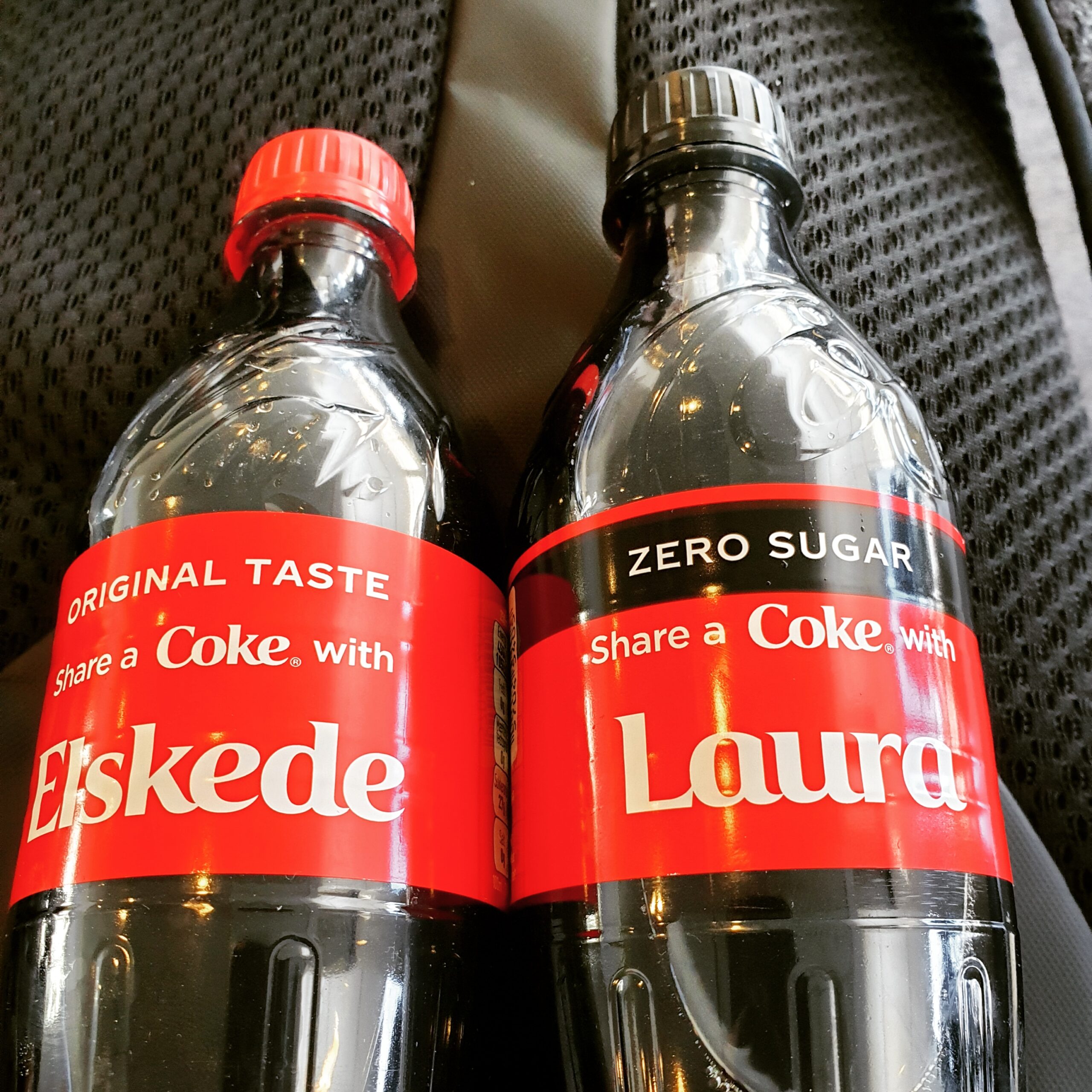
I was tired of Norwegian and English music that felt empty, bland and unbearably sad. It wasn't just that so many artists seemed to be singing for the sake of it: most of the music stirred up the wrong feelings. And when I finally found a decent song, the lyrics often ruined it.
I wanted something where the music and melody came before the words. I could have chosen classical music without vocals, but instead I started looking for music in languages I didn't understand. The idea was simple enough: if I couldn't understand the language, I could forget what they were singing about and just listen to the music.
But then I discovered something else.
Spanish, Italian, Portuguese and French – and yes, even German, Polish and Russian – worked better for me than Norwegian and English. Perhaps part of it was simply that those languages felt exotic at the time. But in Latin music especially, and perhaps French music too, I found more passion. It felt as though they were singing from the heart, rather than giving me that studio-manufactured, almost IKEA-style product I heard in Norwegian and English music.
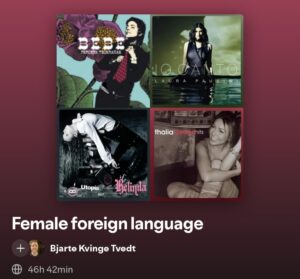
At first, I listened to a lot of Spanish music. Bebe, for instance. My Spotify playlist «Female Foreign Language» brought together artists such as Thalía, Belinda, Natacha Atlas and Laura Pausini.
I can't remember which Laura song came first. Perhaps «Spaccacuore», perhaps «Anima fragile», «Vivimi», or something else entirely. But I remember the voice.
The rolling r's. The strength, the grit. All those little sounds in the spaces between words. A breath, a «hey», an «oh», or a vowel she let live a little longer. Her voice and her music captured my soul.
Paradoxically, I also liked the sound of Italian. Suddenly, listening to someone sing was a lovely thing again.
Laura won me over early, but she also gave me time.
Laura was always there in my playlists, even if she had to share the space with all my other attempts to find a few musical nuggets of gold. To be honest, though, I don't remember many of the others.
I remember Laura.
When «Fatti sentire» came out in 2018, I started looking into concerts and discovered that Laura would be performing at Rome's Circo Massimo. I suggested a trip to Rome to my girlfriend at the time.
And off we went.
I already had a little Italy in me. Not so much through food or Italian music, at least not to any great extent, but through football. I liked both Milan and gli Azzurri. A lot of Norwegians mainly followed English football. I was probably more of an Italophile than an Anglophile.
I had also rather wanted to visit Italy. But it was nothing compared with what was to come.
These days, I sometimes wonder why I didn't choose Italy or Laura Pausini for my school project back in lower secondary school, instead of the universe or Native Americans.
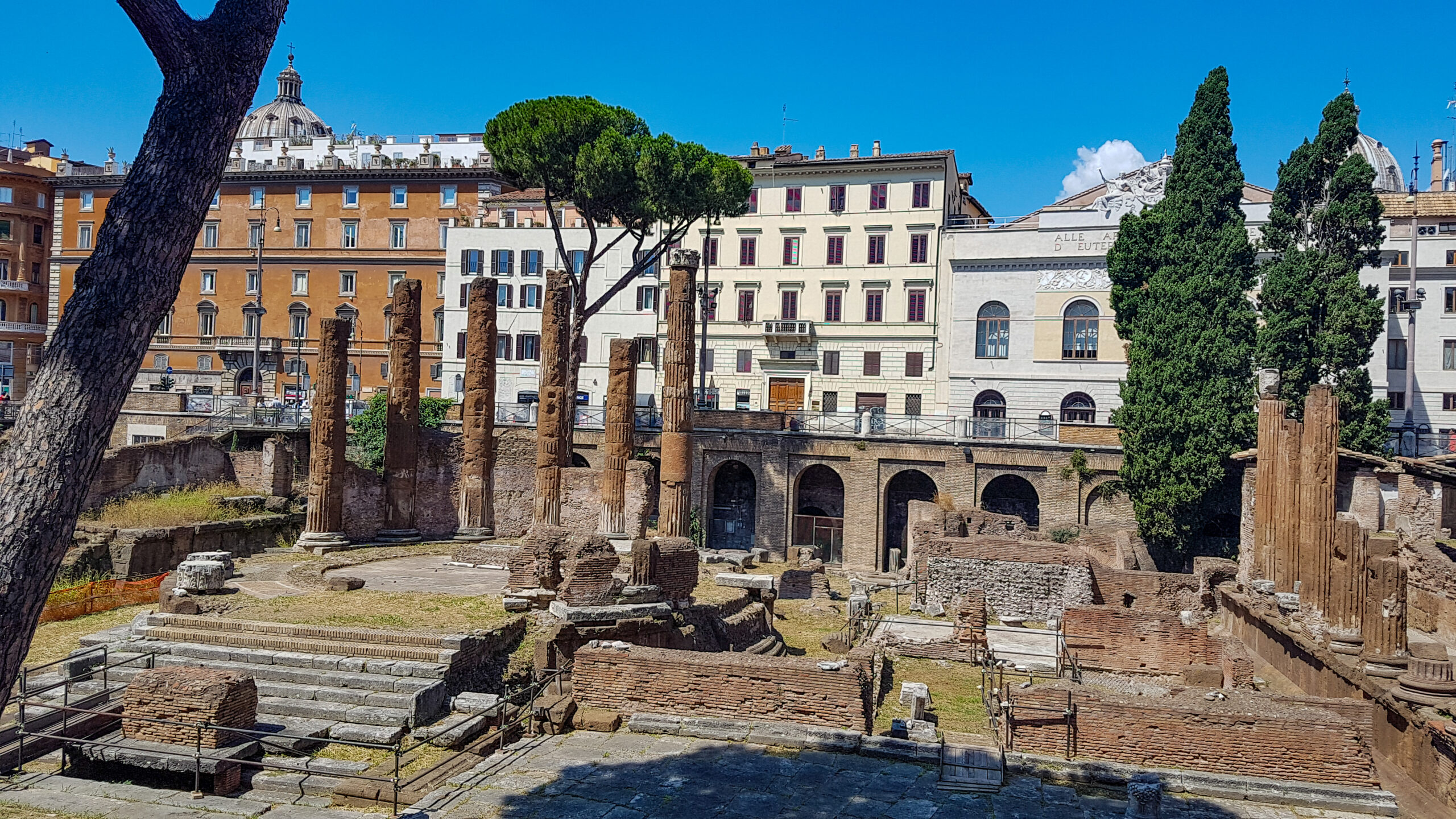
After all, Italy is both the universe and the world, all rolled into one.
It was my first trip to Italy.
Even in the taxi from the airport, we got a little taste of what lay ahead. The driver had to make several detours to reach our hotel in central Rome. It was chaos, he explained.
«Is it because of Laura Pausini?»
«Sì, sì. How you know?»
«We are going to the concert. We are from Norway.»
Clearly, that wasn't the answer he had expected. He called his wife to tell her about the two Norwegians who had landed in his taxi.
«Due norvegesi …»
We had come to Rome for Laura Pausini, and before we had even reached the hotel, we were already a story our taxi driver could tell over dinner.
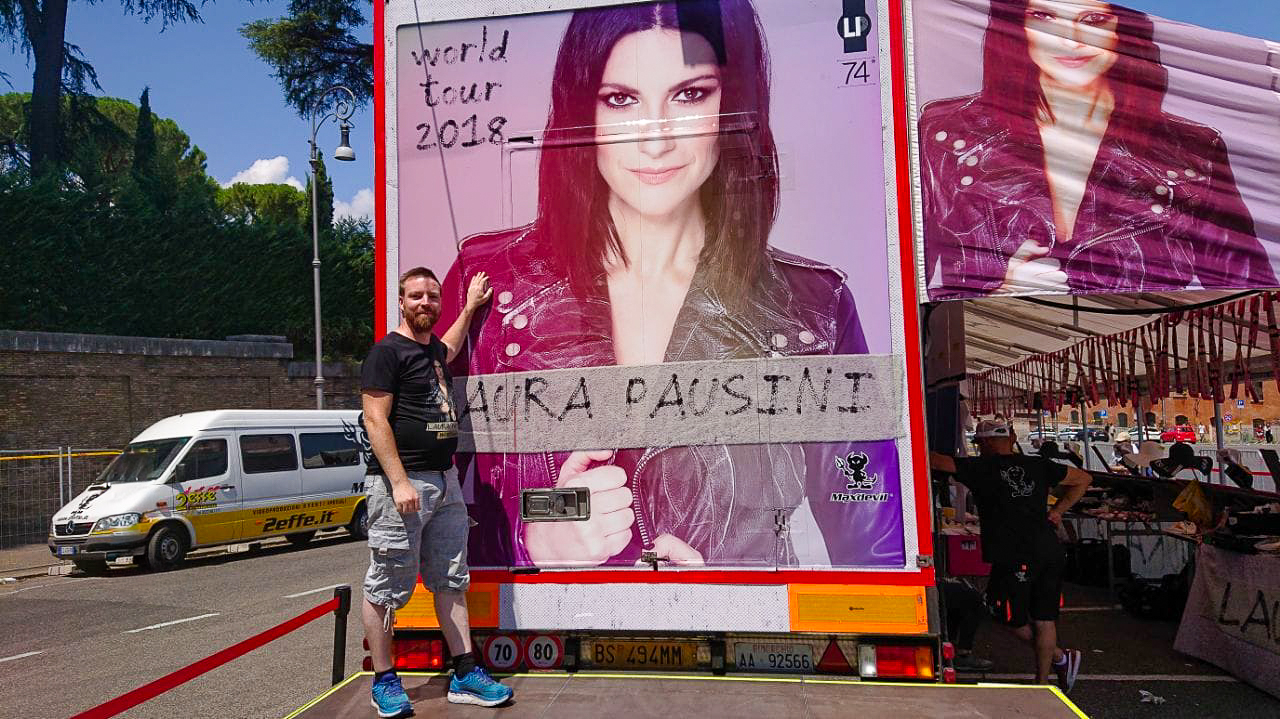
On concert day, we walked through a scorching Rome towards the Circo Massimo. Past the Pantheon, through streets and alleyways, until the city opened up. It was ridiculously hot for two Norwegians and, naturally, we had arrived far too early. Despite the heat, I bought a black Laura T-shirt and enthusiastically posed beside a lorry carrying a poster for the «Fatti sentire World Tour».
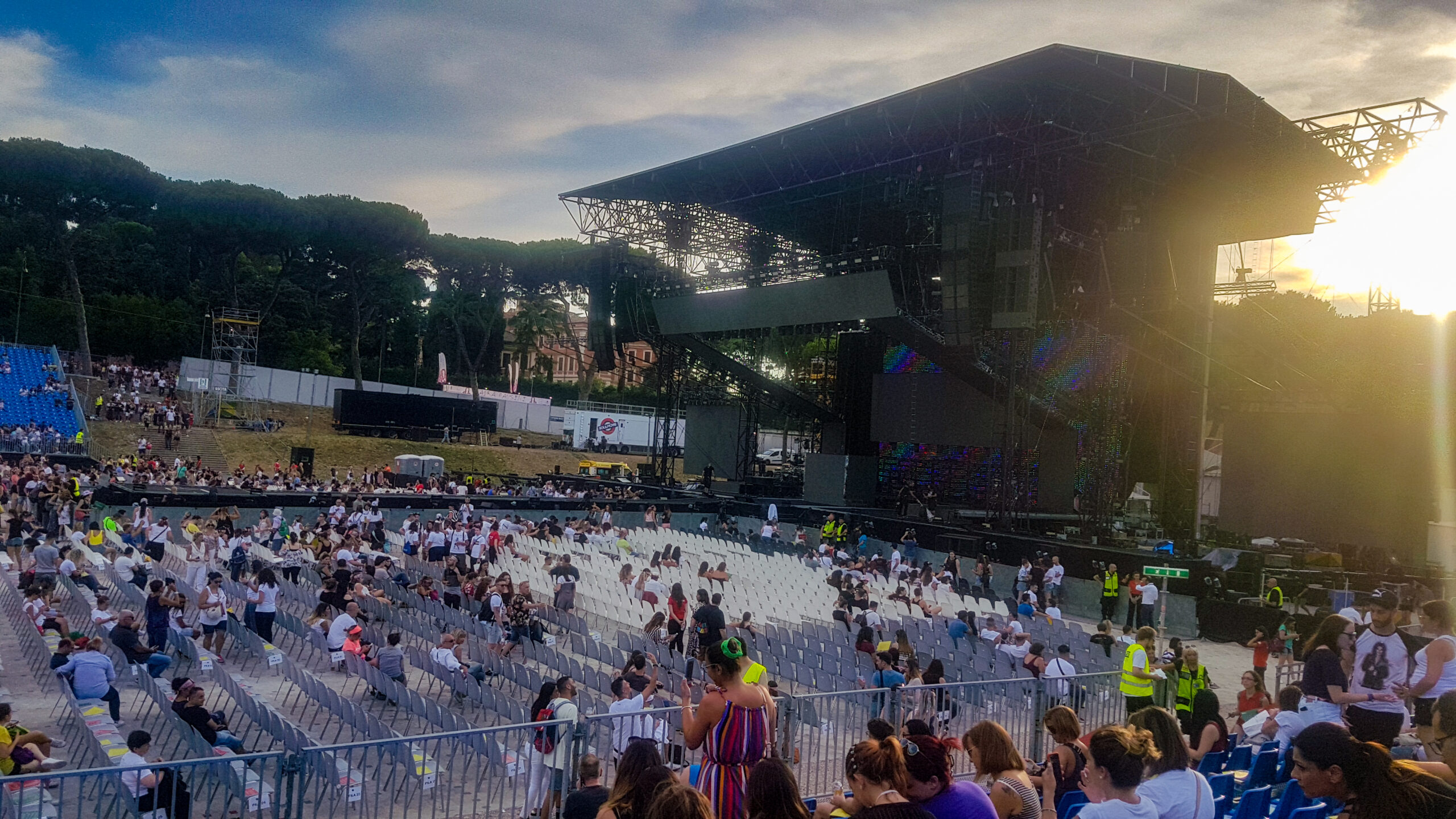
At last, they opened the gates to «massive Massimo», the Circo Massimo. Long, enormous, and yet somehow capable of becoming intimate later that evening.
I already had quite a wish list: «Simili», «Non è detto», «E.STA.A.TE», «Innamorata», «Resta in ascolto», «Fatti sentire», «Tra te e il mare», «Strani amori», «Frasi a metà», «La soluzione» and «La solitudine».
I knew plenty of Laura.Considerably less Italian.
So I was ready for the songs. Understanding what she might say between them was another matter. I was considerably less prepared for that.
There was almost nothing but Laura and her voice.Perhaps that was when the tears came.
After a less-than-thrilling opening act armed with an acoustic guitar, the waiting really began.
«LAURA! LAURA! LAURA! LAURA!»
Clapping, shouting and screaming.
Then all the stage lights went out. Something was happening down there. The audience could feel it.
Any moment now.
Lights. Sound. Smoke.
And then Laura.
Blue light around Laura's almost-black silhouette. Then came the opening words of «Non è detto».
«E tu cosa aspettavi…»
No tears yet. But I had goosebumps despite the heat, and a feeling of almost indescribable joy inside. The audience sang along, as expected.
About fifteen seconds had passed.
The mood was set.
As «Non è detto» drew to a close, Laura began drawing the audience in.
«Voi!»
«Così!»
And then:
«GRAAAAZIE!»
That might have been when the first tears came. I can't quite remember any more. I only remember the feeling.
Honestly, I could have gone home right then. I had seen Laura. I had heard Laura. And now Laura had said grazie. Check, check and check. Perhaps all I was missing was a «ciao» and a «Le mani al cielo!».
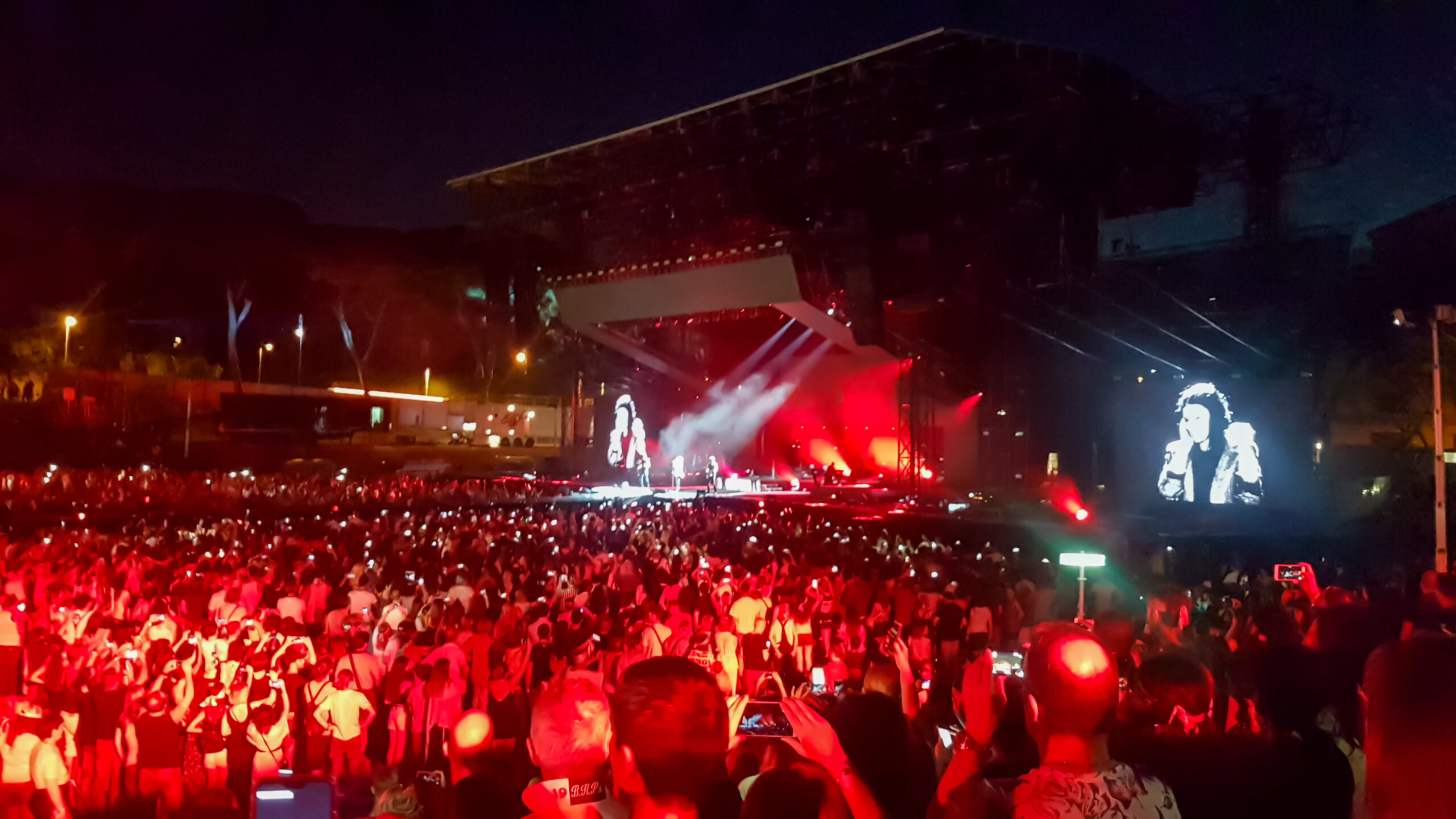
But «massive Massimo» was going to become far more intimate than I had imagined.
As time went on, it felt less and less like being in an enormous audience and more like belonging to a very, very large family. Laura talked a lot between songs. She laughed, showed real joy and made the people around her part of the concert. I recognised several members of the backing choir, and Paolo Carta had his own moments while Laura filmed him on her phone from the stage.
At one point, she began asking which countries people had come from.
«Brasile! Argentina! Slovenia!»
«… e Sardegna!»
Apparently, Sardinia was allowed to enter as a country in its own right that evening.
I shouted «NORGE!» as loudly as I could.
She didn't hear me.
I would remember that next time.
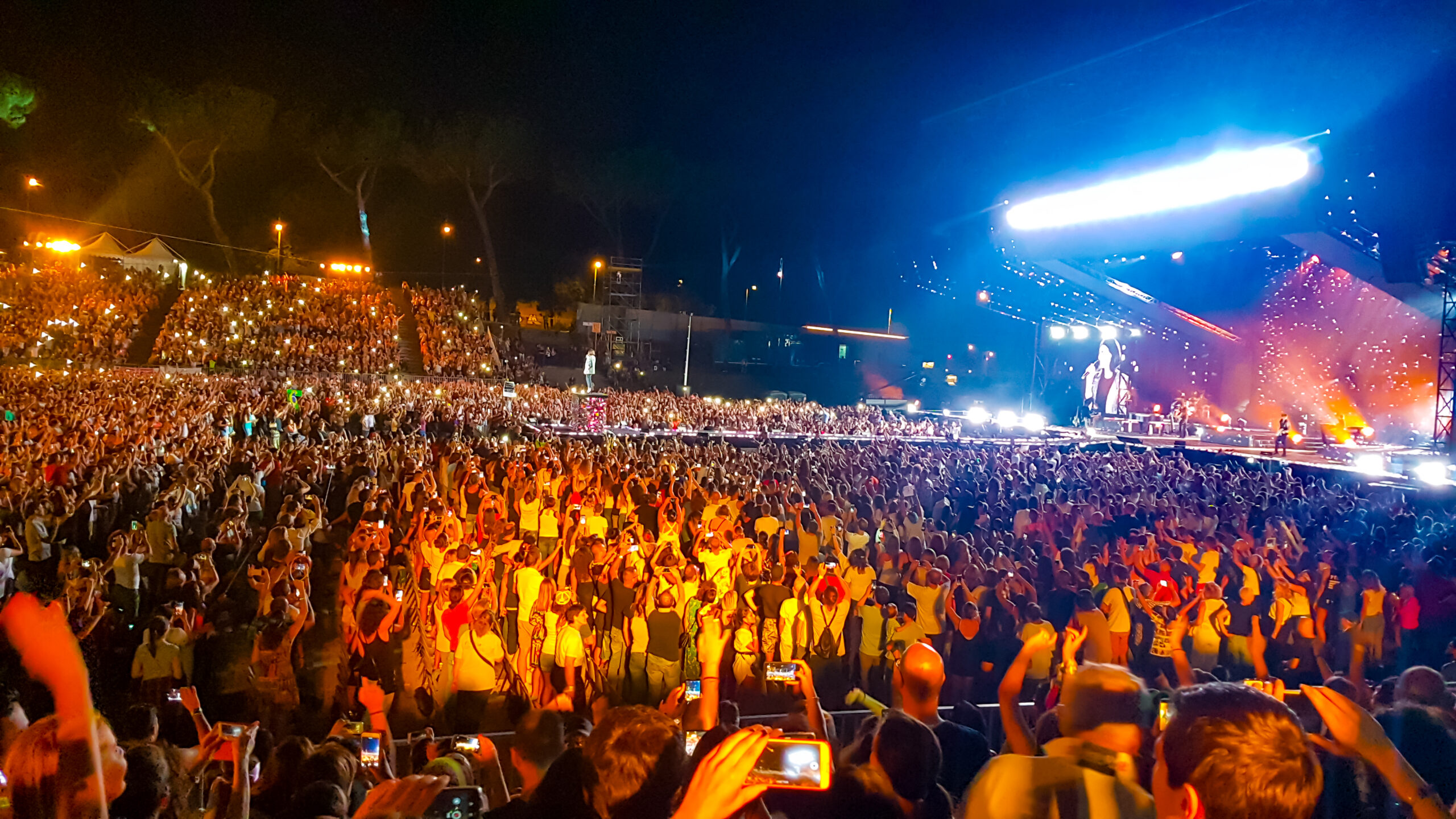
Later, Laura sat on a sort of box at the very end of the walkway stretching out into the audience. Almost alone. There, she sang «Strani amori», «Tra te e il mare» and several of the older songs, among others.
There was almost nothing but Laura and her voice.
Perhaps that was when the tears came.
Beside me stood an Italian man I had never met before. We didn't talk much, but our eyes met several times during the concert when we clearly agreed that something was particularly beautiful. I had noticed him because he was one of the few people who wasn't filming the whole time. He barely took his phone out.
He was a more traditional Laura fan than I was. The older songs seemed to move him even more. But by the end, there we were, jumping up and down together.
Towards the end, Laura introduced the whole band, one member at a time. Eventually, there was only one person left to introduce.
Herself.
She started warming up the crowd.
«FATTI SENTIRE, ROMA!»
And then:
«LAURA PAUSINI!»
She looked so incredibly happy. There was something liberating and funny about the whole scene. No Law of Jante, that Norwegian insistence on not thinking too highly of yourself. Of course Laura Pausini deserved an introduction too.
I have watched the video of that moment many times since. Even now, I get shivers when she says her name.
But I knew she wasn't finished.
There had to be an encore. Perhaps even in a bathrobe.
And sure enough.
Laura came back in a bathrobe.
«Grazie a tutti!»
«Le mani al cielo!»
She talked quite a lot at the end. And I have to say, I like it when Laura talks. Something about it reminds me of La Linea, the Italian cartoon, or perhaps it's simply her more «italino» side. She talks fast, with an energy even more exuberant than when she sings. At the time, I only caught bits and pieces. Today, I would understand much more.
Then «E.STA.A.TE» returned. Fireworks above the Circo Massimo, and enormous blue balls bouncing around the audience.
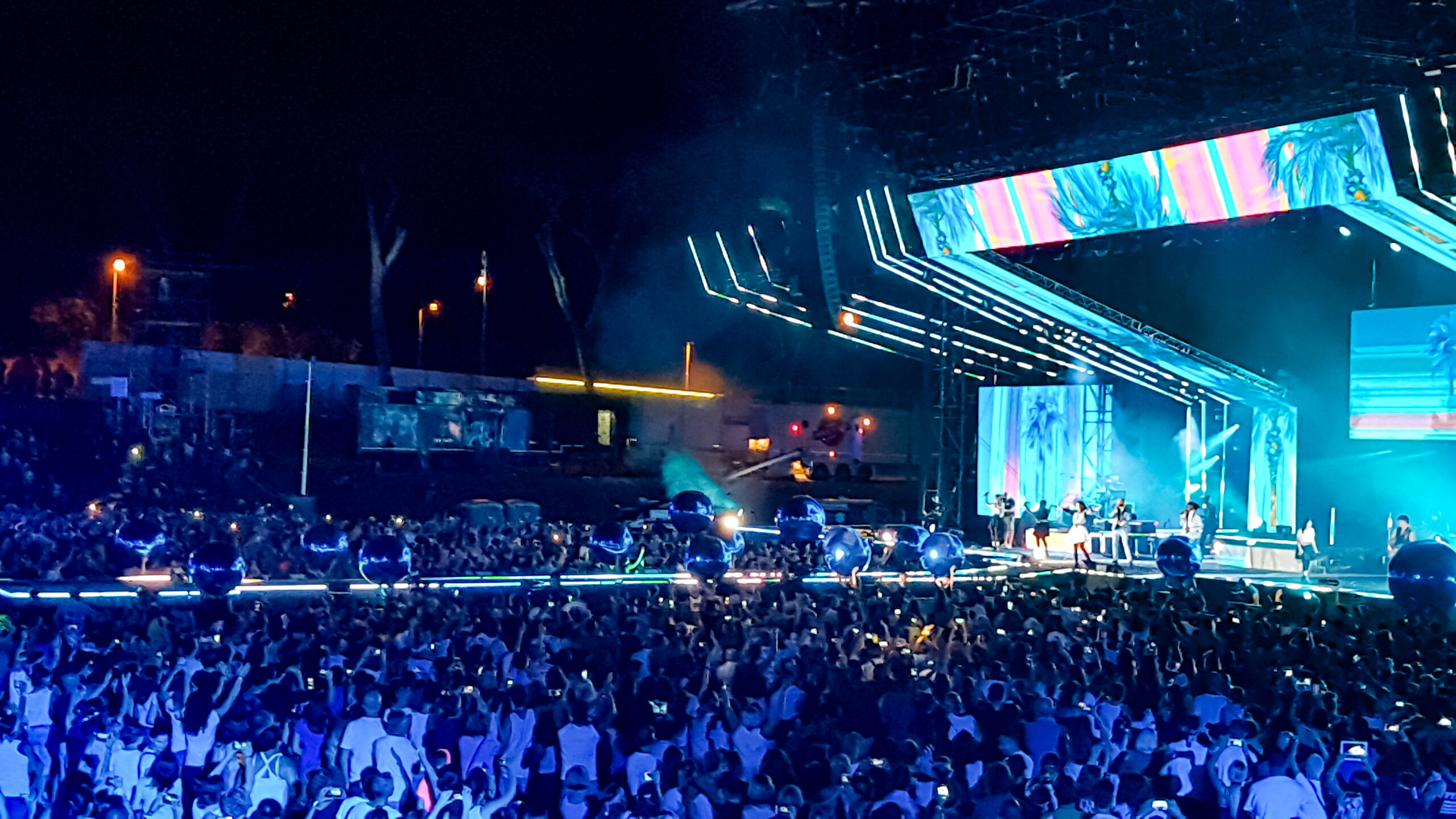
The concert lasted much longer than I had expected. Almost three hours with Laura. Even then, I was thinking about how much I had got for the price of a ticket.
Today, I probably think about it even more: why spend 1,500–3,000 Norwegian kroner on mediocre artists and absurdly expensive Norwegian beer somewhere in Norway, when I can spend half that on a ticket, enjoy almost three hours with Laura Pausini, and be lured to Italy at the same time?
Sorry, Norwegian festivals. We need a festival with Latin artists and Laura Pausini as the headliner.
Laura came back in a bathrobe.
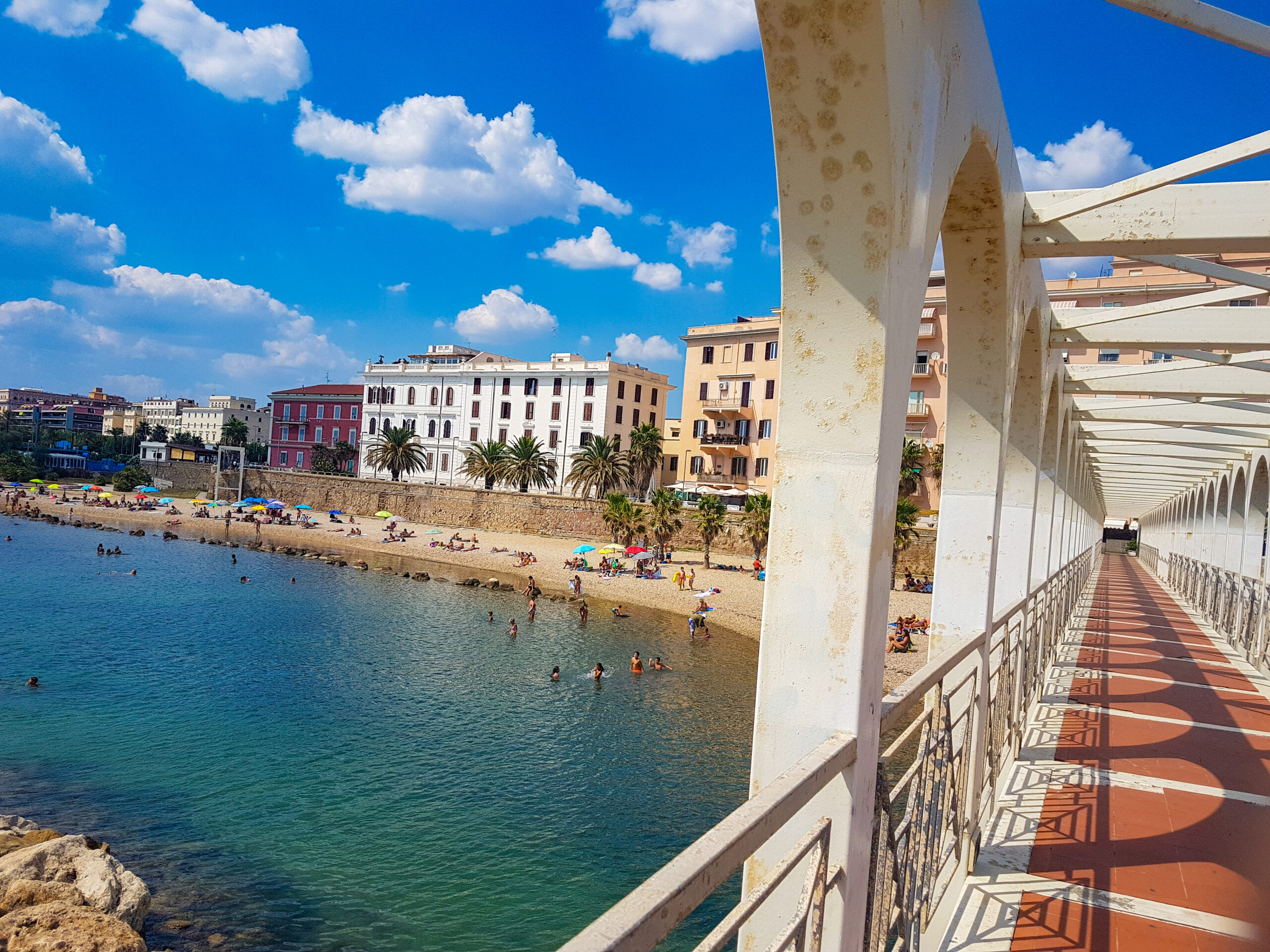
After Rome, we went to Civitavecchia, to a rather odd beach. There had been a dispute between the council and the people running it, and there weren't many people around. In places, it wasn't particularly clean either. But we settled down among the rounded stones and tried to get a little sun and have a swim.
At some point, we needed more beer and water, so I headed towards what I thought was the town centre to find a shop.
On my way back, bag in hand, I met five young women, perhaps eighteen to twenty years old. They were collecting signatures and donations for a campaign against animal cruelty.
I explained that I wasn't Italian, but apparently that wasn't a problem. I could still sign my name, leave my email address and make a contribution. So I signed, gave them three euros and was about to move on.
Then one of them asked:
«Where you from?»
«Norway.»
And so I went for it:
«Ma io parlare poco italiano. Amo Laura Pausini. I was in Roma for la concerta al Circo Massimo.»
That little bit of Italian was enough to change the conversation completely.
«Ah! You know her songs?»
«Sì, sì, sì! Resta in ascolto? Simili? La solitudine?»
Suddenly, all five were involved.
Eventually, we settled on «Resta in ascolto». The girls began to sing and, once I worked out where they were in the song, I joined in.
In the middle of a street in Civitavecchia, five Italian girls and a Norwegian were singing Laura Pausini together.
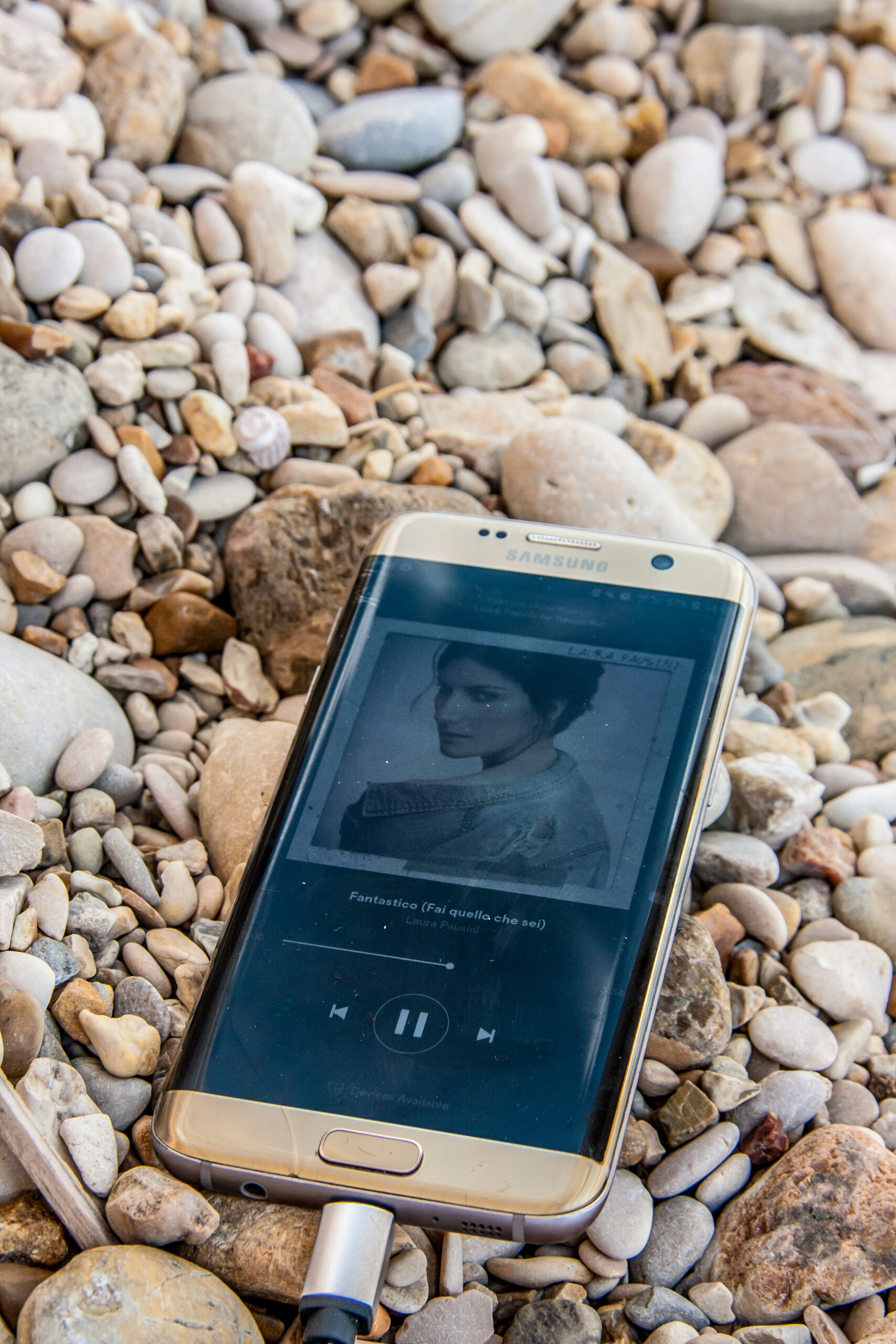
I had only gone out to buy beer and water.
In the end, I was the one who had to bring it to a close. I needed to get back to the beach. But it almost seemed as though none of us really wanted to stop. We could easily have stayed there much longer, talking about Laura or singing her songs.
«Ciao, ciao.»
I hugged the most enthusiastic of the girls, waved to the others and set off towards the beach.
With the beer and water.
By the time I came home from Italy, it had already begun.
I wanted to go back.
Or perhaps, more precisely: why don't I live in Italy?
Meanwhile, Laura had begun taking up more and more space in my life. I listened to her music more, followed her more closely and wanted to know everything that was happening. She had almost become one of the family, one of those people whose news you keep following.
So when Laura Pausini and Biagio Antonacci announced a series of concerts together the following year, deciding to see Laura again wasn't particularly difficult.
Bologna was the most practical option, and Bologna it was.
At the time, the choice had perhaps been a little random.
Today, I would happily go back.
I stood outside the inner-circle fence, holding my scarf out over the barrier and calling for Laura.
Another summer holiday in Italy. Laura Pausini and Biagio Antonacci had something going on together and, as far as I was concerned, all that remained was to try for concert number two.
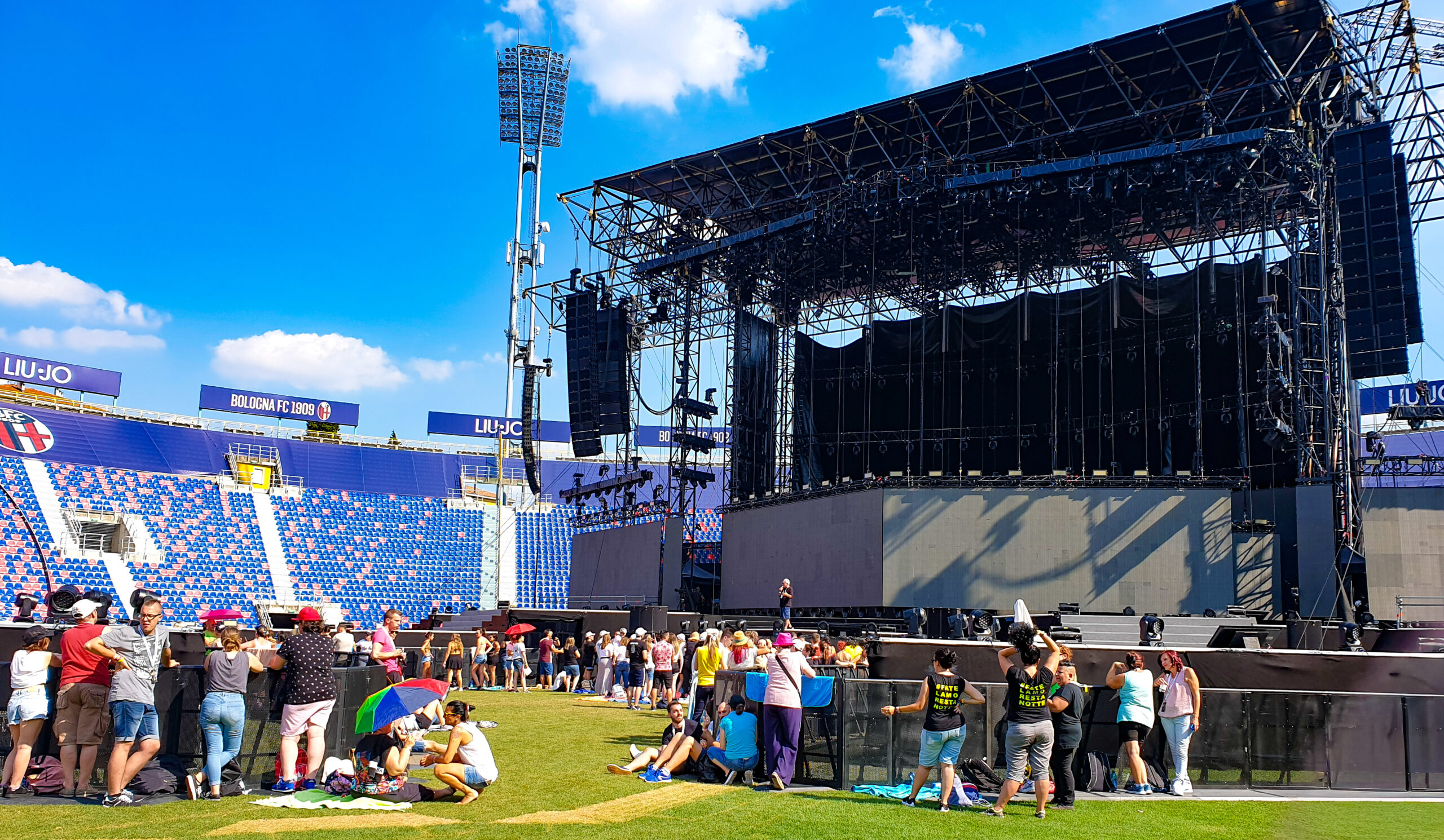
We had chosen Bologna fairly randomly, because it was the most practical option. The day before the concert, some locals recommended a restaurant near the stadium. I had an epic pasta dish and tasted a lasagne from another world.
Afterwards, we went over to the concert area.
The ticket included access to the soundcheck, but I wasn't sure where to collect the actual tickets. In the fan-club area, where there was also information about meeting up before the soundcheck, I noticed an older man with glasses.
I went over to ask him for help.
He explained where I needed to go. We shook hands, I thanked him for his help and carried on.
It was Fabrizio Pausini.
Laura's father.
I just didn't know that yet.
Before the soundcheck, little Paola came out on stage to try her hand at karaoke and singing along to a backing track.
And there was the man with glasses again.
Grandad Fabrizio.
That was when I realised who had helped me earlier. The man whose hand I had simply shaken, whom I had asked about tickets and thanked, was Fabrizio Pausini. Laura's father.
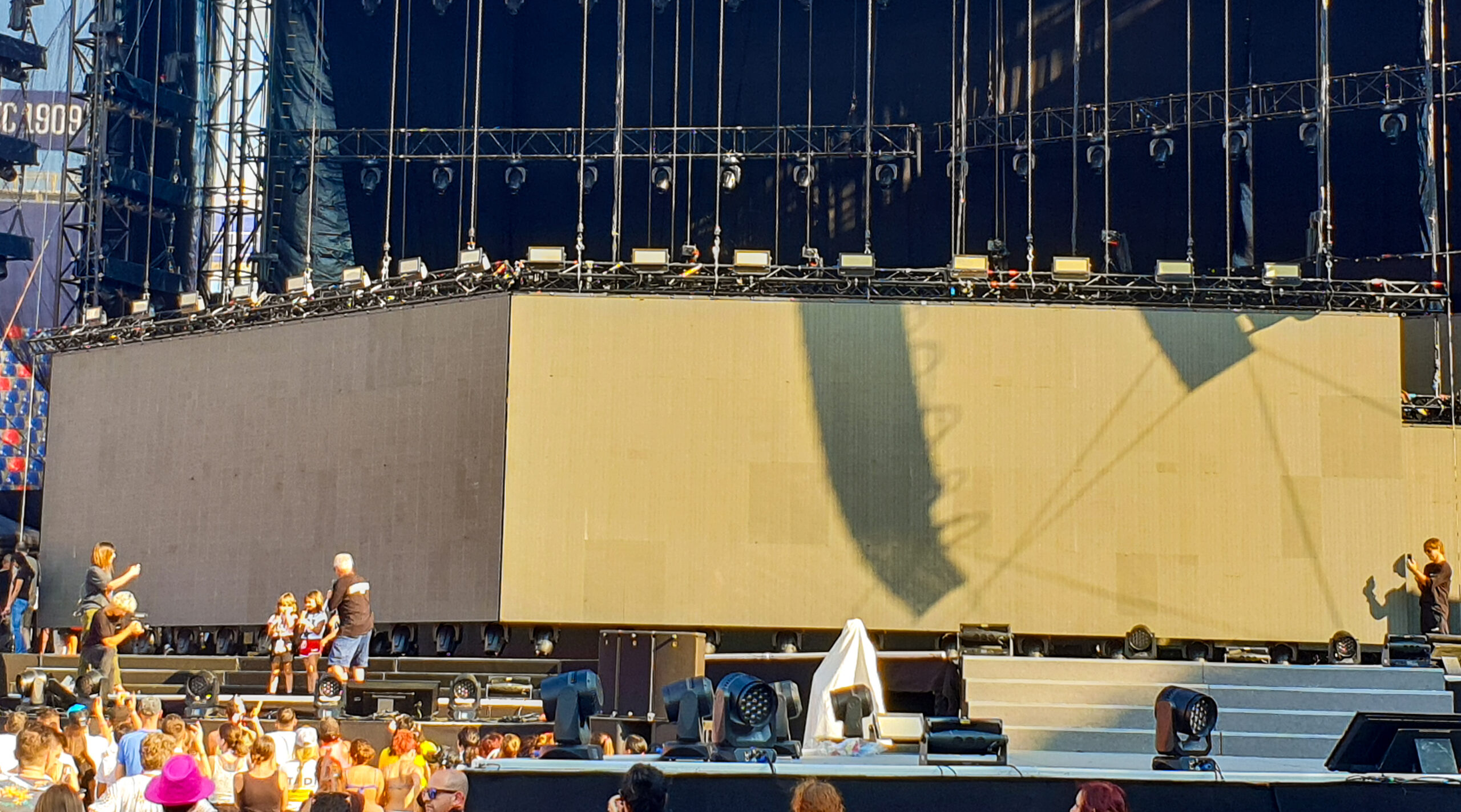
He sang a few old Italian classics while a very lively Paola bounced around the stage.
Then Laura and Biagio came out.
It wasn't a big concert production. They chatted to the fans and turned the soundcheck into something far smaller and more intimate than the Circo Massimo had been the year before.
And this time, I had come prepared.
After shouting «NORGE!» in vain in Rome, I had brought a Norwegian scarf to Bologna.
I stood outside the inner-circle fence, holding my scarf out over the barrier and calling for Laura.
Suddenly, it worked.
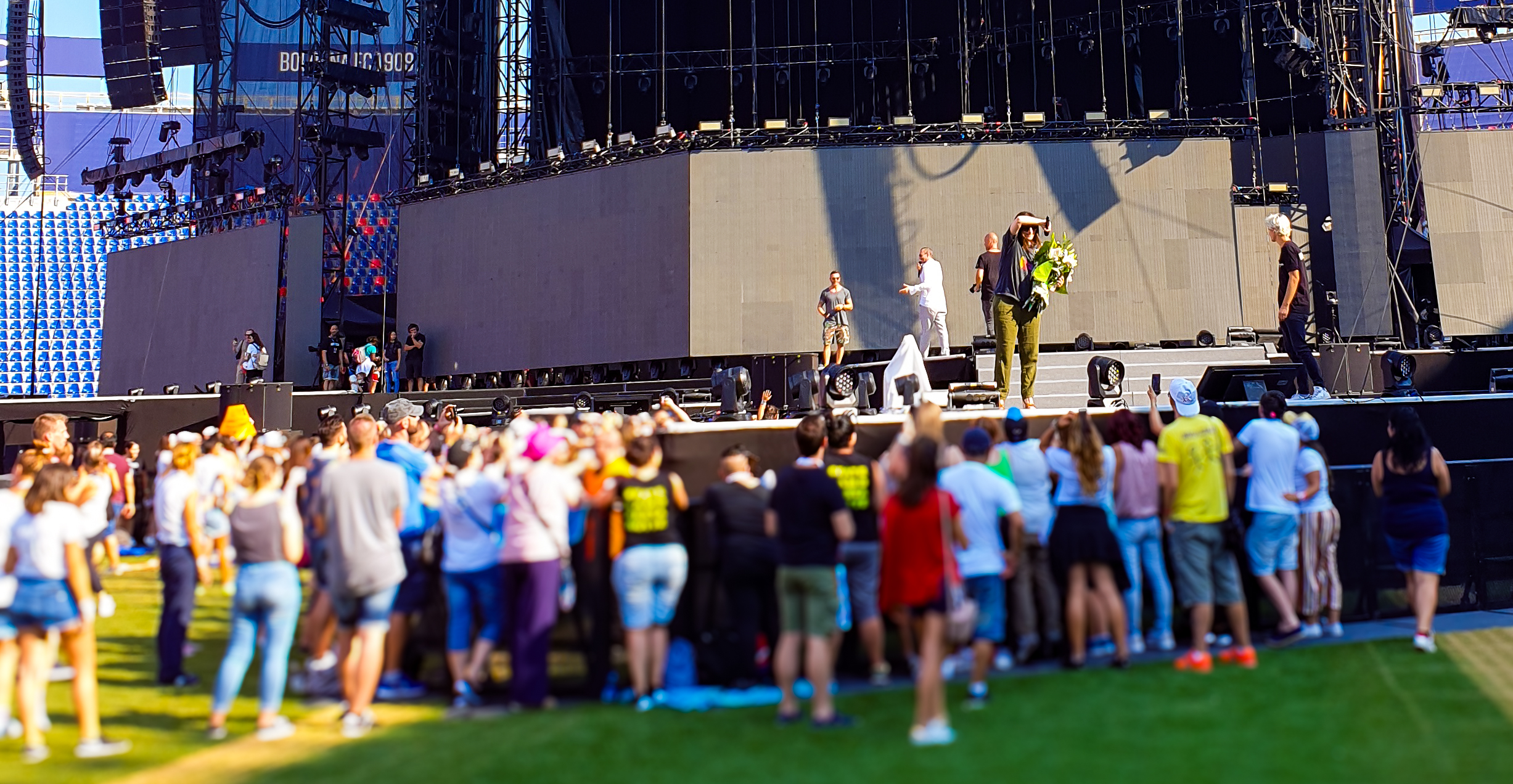
Biagio looked over at me.
Then Laura looked.
«Aspetta», I thought I heard her say to Biagio.
Then she turned towards me.
«From Norway?»
«Sìììì!»
«But you know some Italian, right?»
«Sìììììì!»
«Great. Hope you enjoy the concert.»
«Sìììììì!»
The little Italian I knew had shrunk to a vocabulary of one word.
Sì.
But she had spoken to me.
Laura Pausini had spoken to me.
Afterwards, my heart was beating so hard that I lay down on the grass. I stayed there looking up at the sky and over towards the stadium's still almost-empty stands.
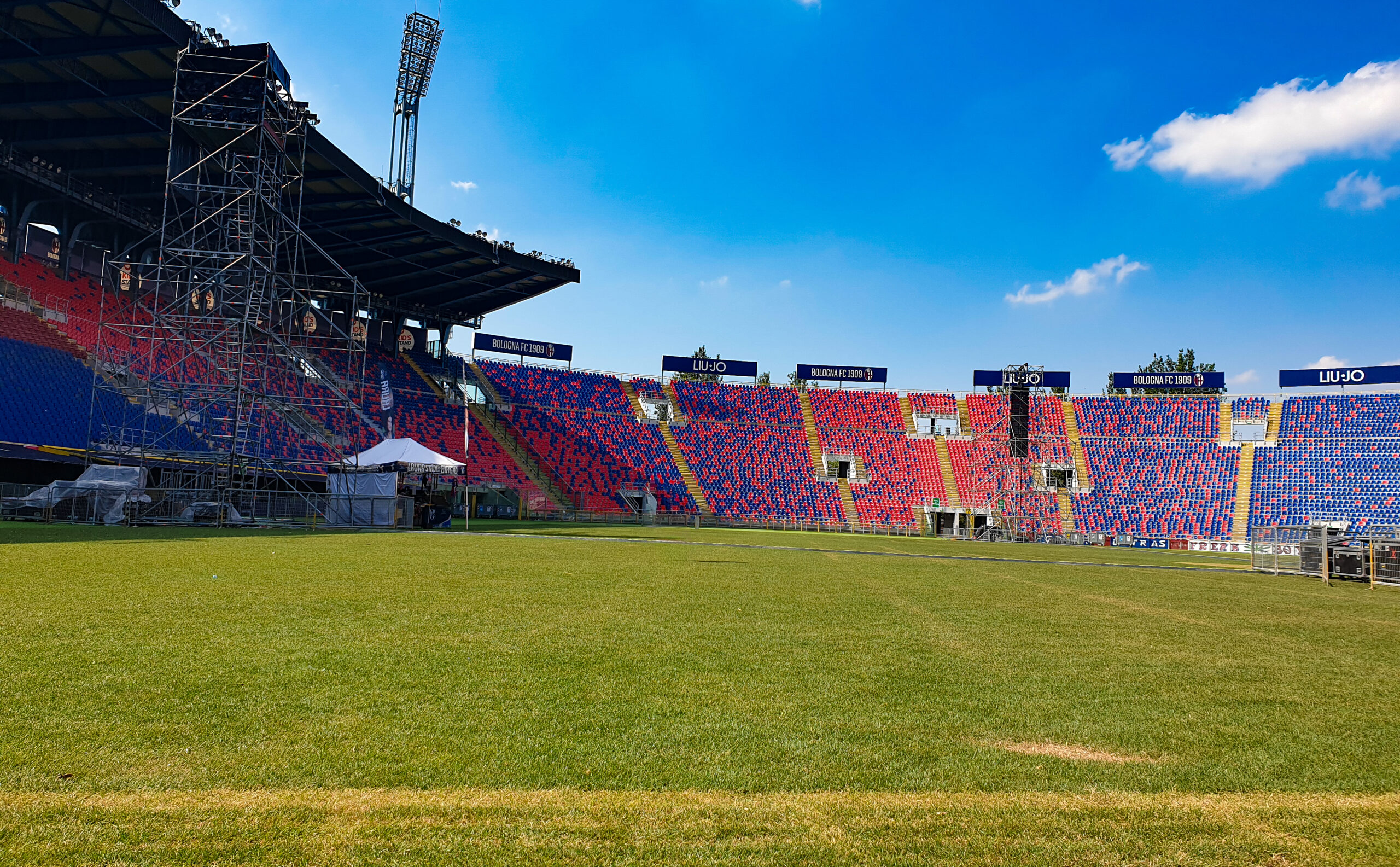
Everything was magical.
«Laura Pausini!», I said to myself.
Honestly, that would have been enough.
I could have gone home after that. I was already happy, riding a wave of excitement I couldn't remember feeling for a very long time.
But of course I wasn't going home.
I went to get myself a beer.
On the way, I met a Swiss woman who asked whom we had come to see. She was mainly there for Biagio and would be taking the train home to Switzerland that same evening.
A day trip from Switzerland to Bologna.
Just for a concert.
Perfectly understandable, as far as I was concerned.
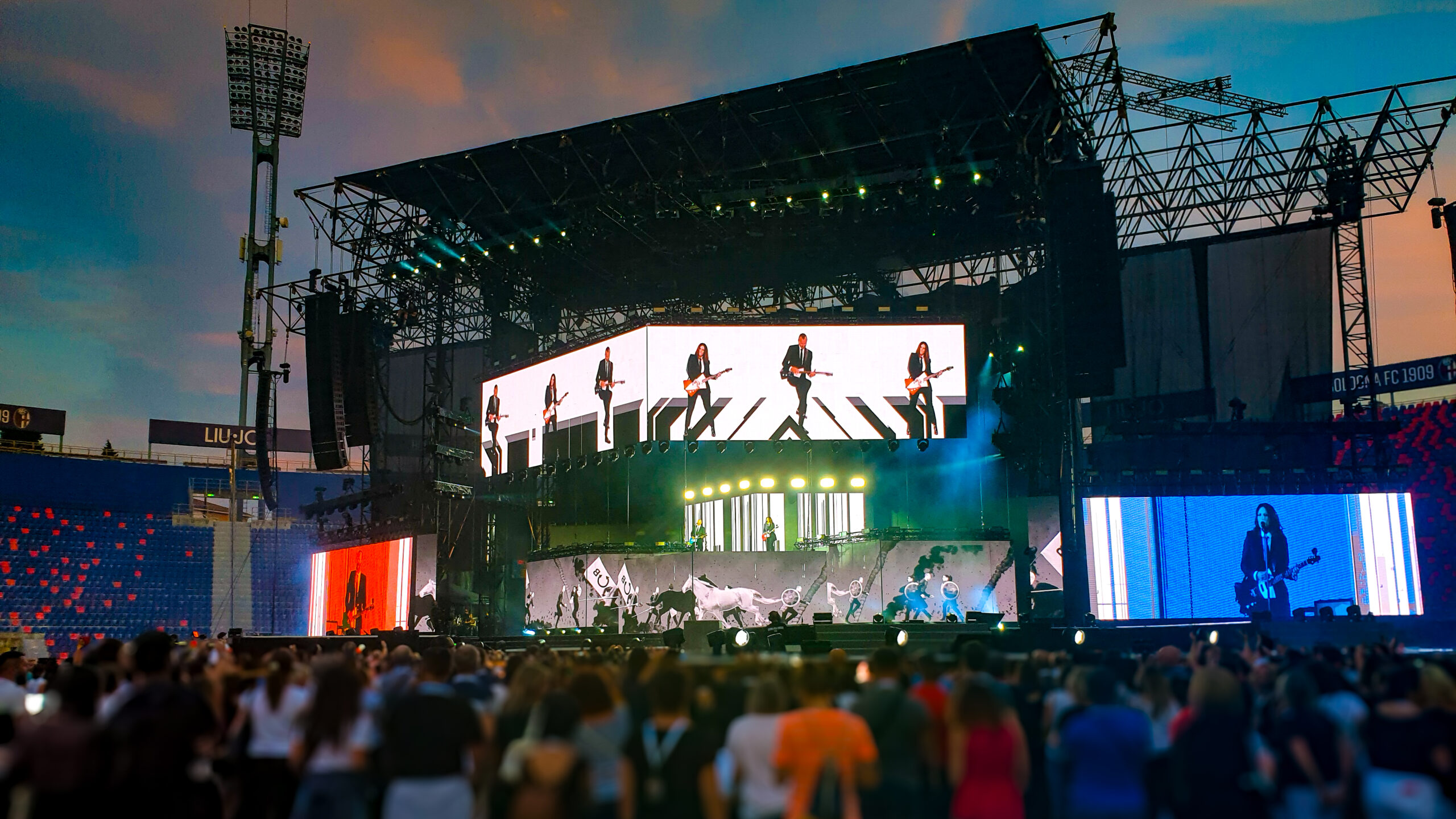
We were near the front, with a great view of the stage, right beside the inner circle. Just one barrier separated us from the people who could stand directly in front of the stage.
I leaned against the barrier.
My heartbeat had no intention of slowing down. I was still in a sort of euphoria after the soundcheck and everything that had happened earlier.
Soon there would be more Laura.
More Laura Pausini!
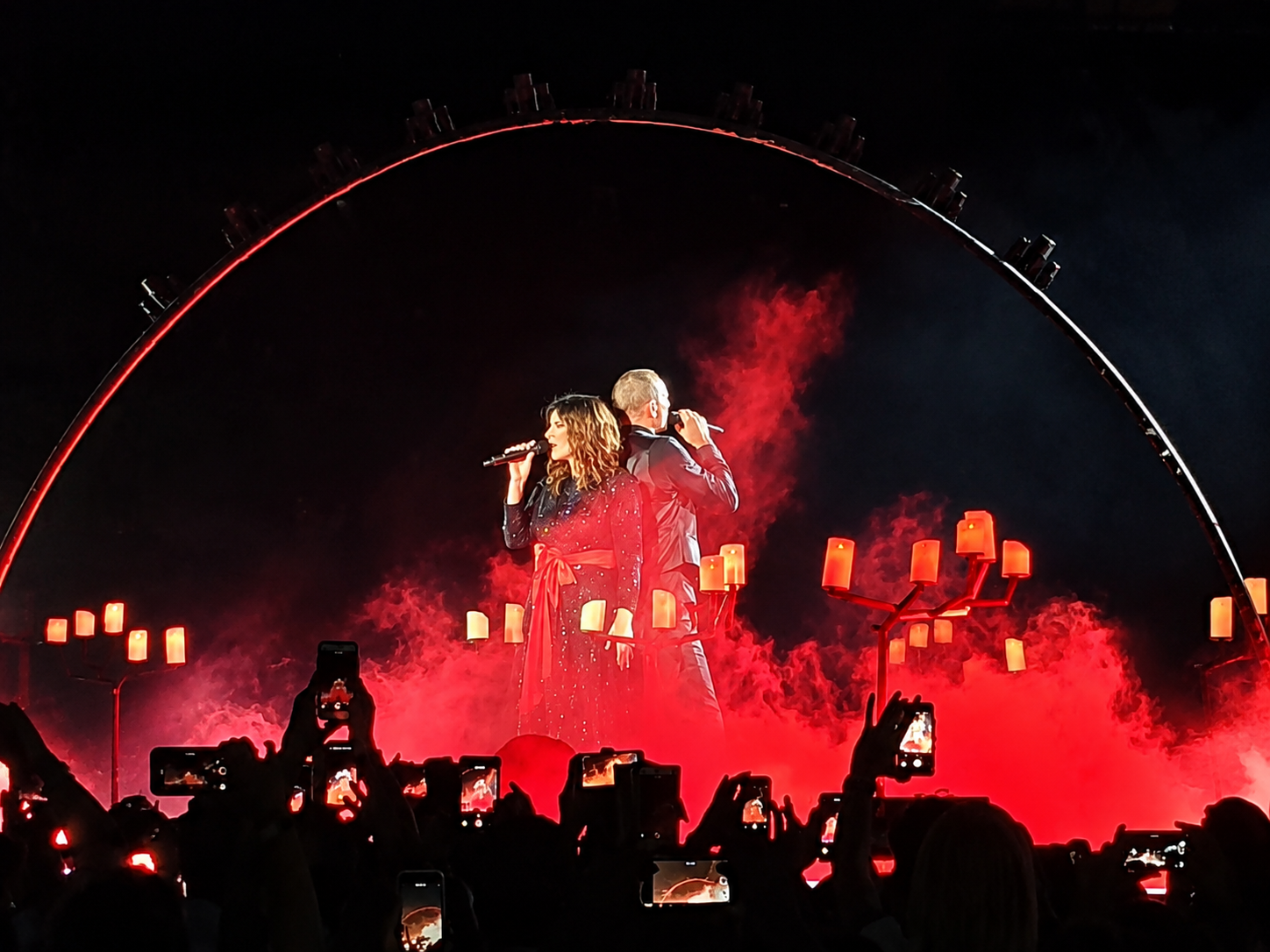
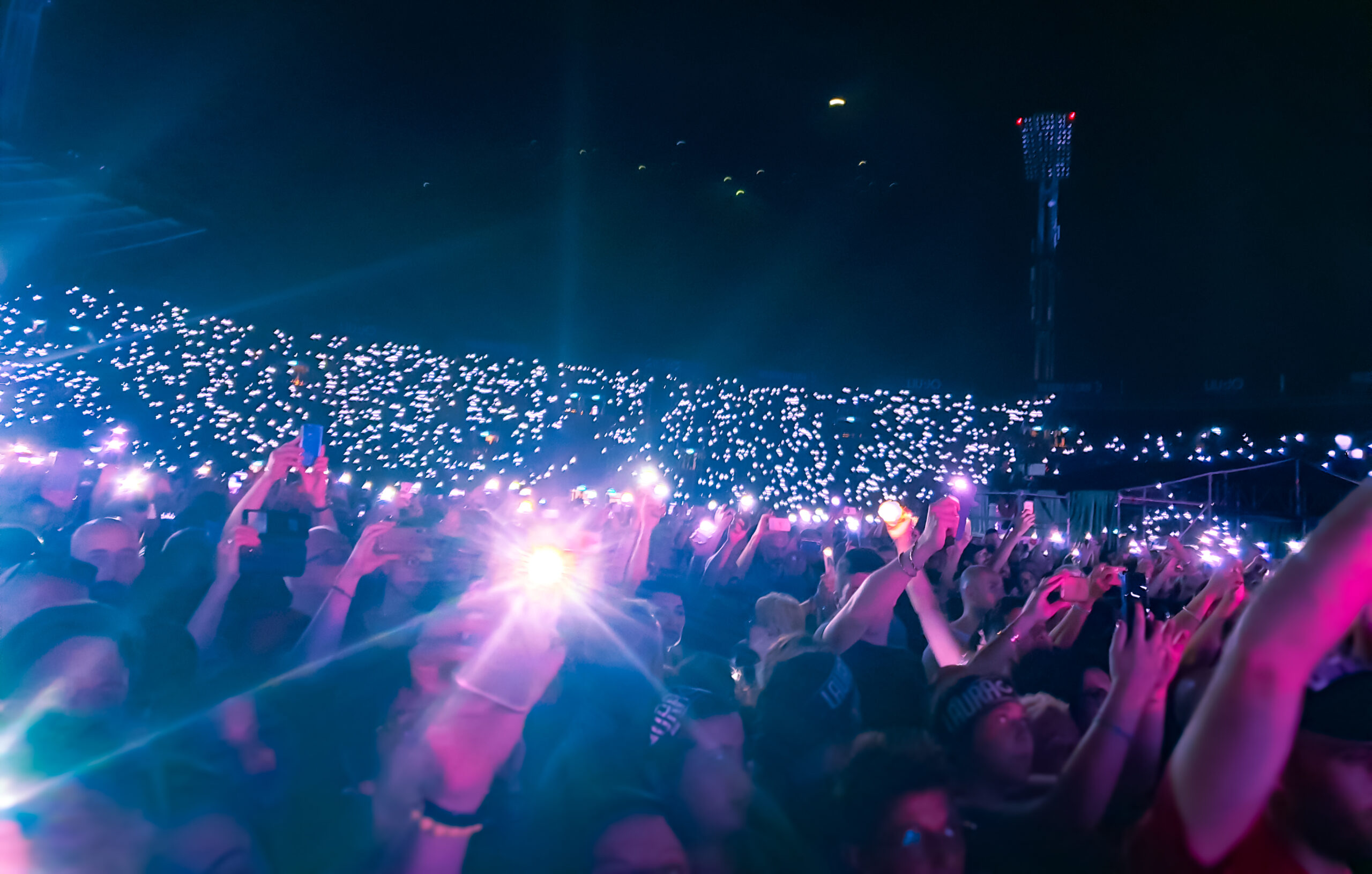
Laura and Biagio are good friends, and you can tell on stage. They enjoy each other's company. At its best, it was almost like getting double the Laura in charm and enthusiasm.
They sang together, swapped songs and gave each other breaks along the way. Some songs worked magnificently, and I got to hear new versions of them.
Other times, I wasn't quite on the same wavelength.
After all, I had come to Bologna for Laura Pausini. So I wanted to hear Laura sing Laura Pausini.
But fair enough.
It was a long concert, like the one in Rome.
And in the middle of it all, we almost found ourselves watching a little Laura-and-Biagio talk show. I understood some of what they were saying, but not all of it. It's one of the parts I would really love to find a video of today. Because now I would certainly understand much more of their conversation.
The concert also revealed plenty of new and different sides of Laura.
Right at the beginning, I saw her with a guitar. A slightly more rock, rougher-edged side than the Laura whose music I had first fallen in love with.
During Biagio's «Pazzo di lei», she appeared in a yellow-and-black outfit that almost made her look like a bee, surrounded by dancers in the same colours. The yellow dress, with its sun motif, had been designed especially for the tour by Sicilian designer Fausto Puglisi.
This time, she didn't sing throughout the whole song. She began alongside Biagio, with a little humour, before devoting herself almost entirely to dancing. An all-yellow atmosphere, an artistic stage performance alongside professional dancers.
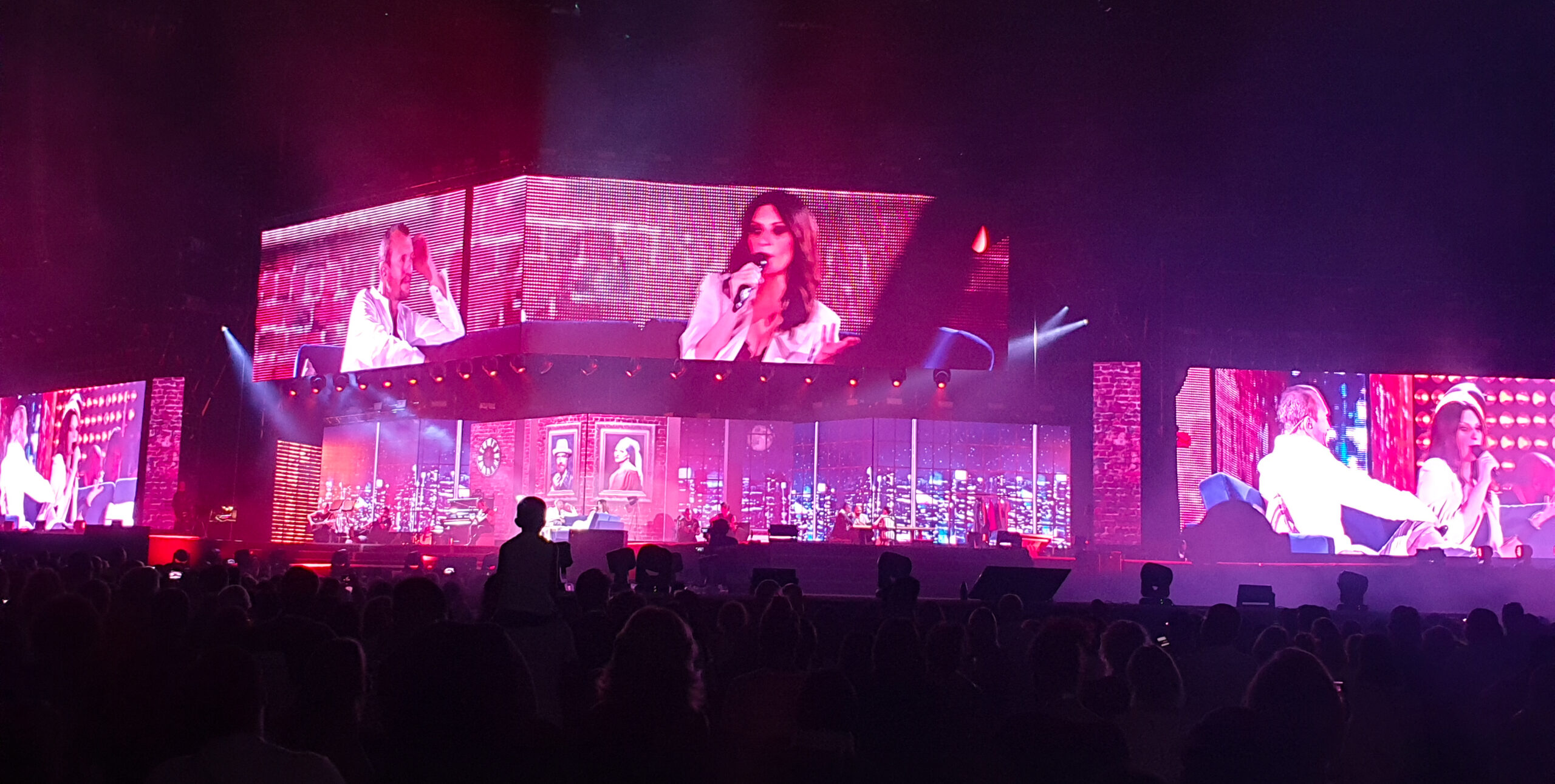
But there is one image from that concert I still remember with incredible clarity.
Laura, alone, beneath a great arch. Blue light. No Biagio. Just Laura. Laura's smile.
She sang a few classics. Above all, «Non è detto».
Then came the pyrotechnics.
«Laura Pausini!», I said inside my head.
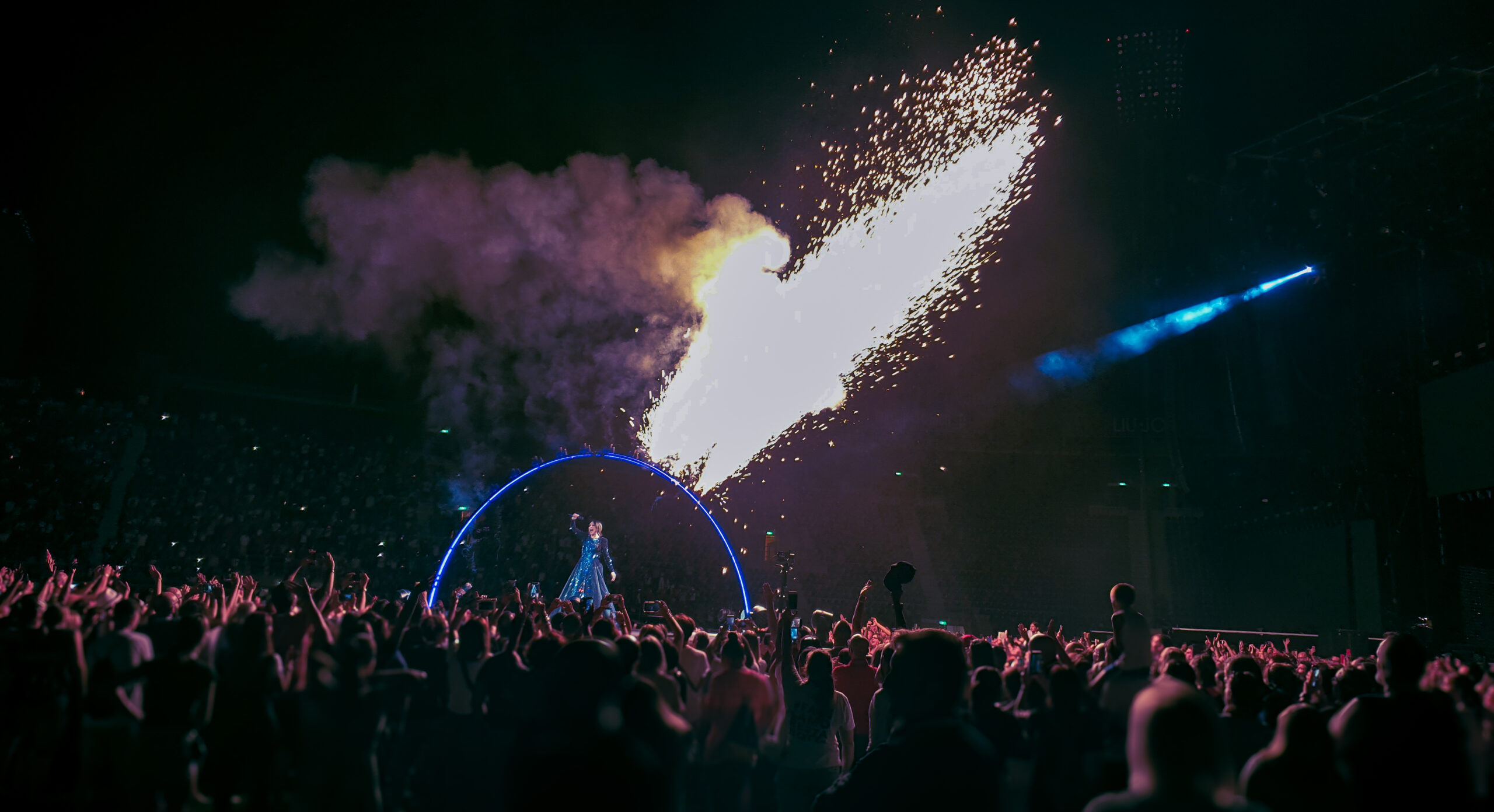
I still say it today. Out loud in the car, or silently to myself when I remember that image.
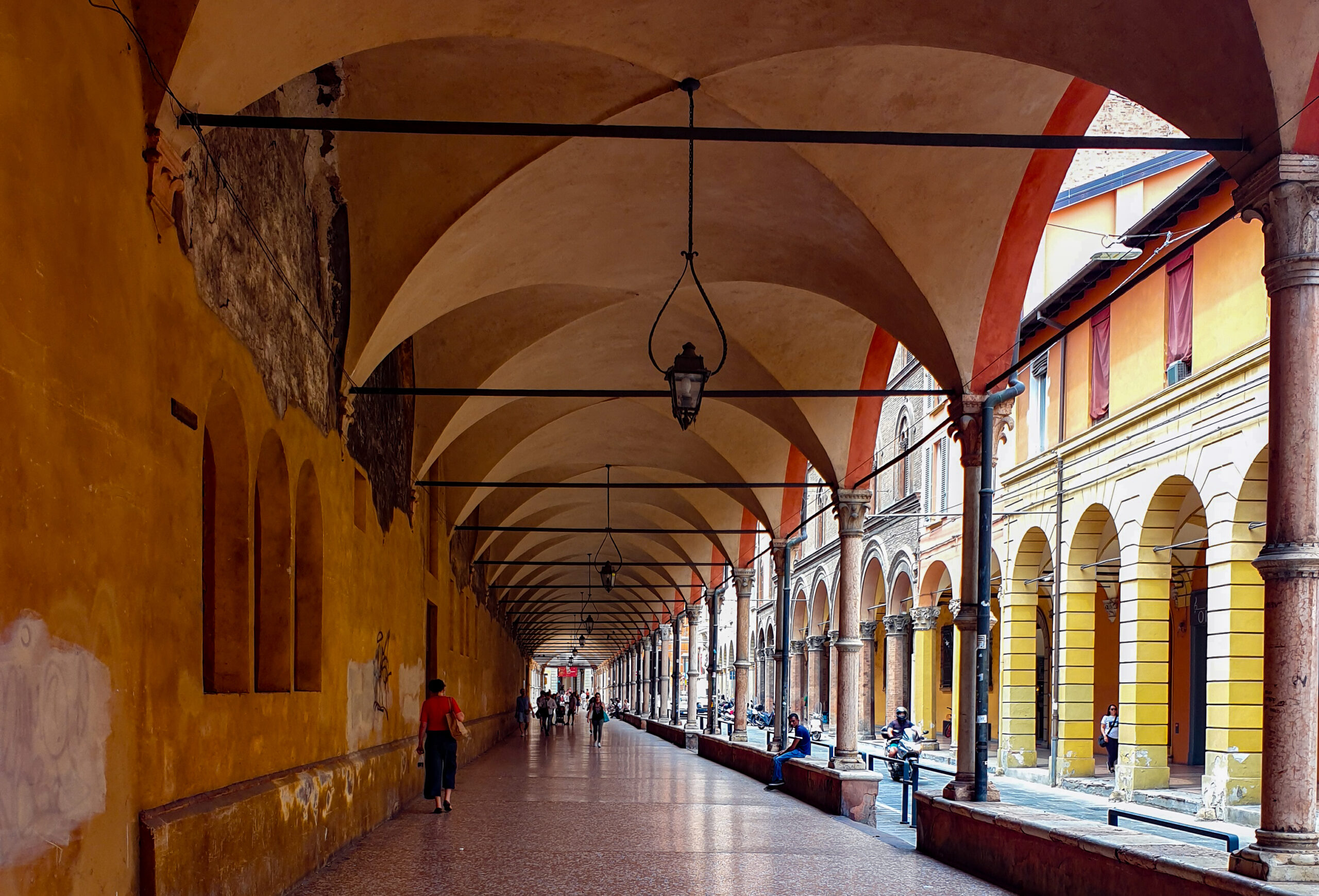
The next day, we left Bologna, the city of porticoes.
Bologna fell behind us, and we took the train to the city of boats.
Venice.
On the train to Venice, I found a magazine with Laura and Biagio on the cover.
Naturally.
I immediately flicked through to the article, read it and photographed the magazine. Then I posted a message on Twitter to thank Laura and Biagio for the concert in Bologna.
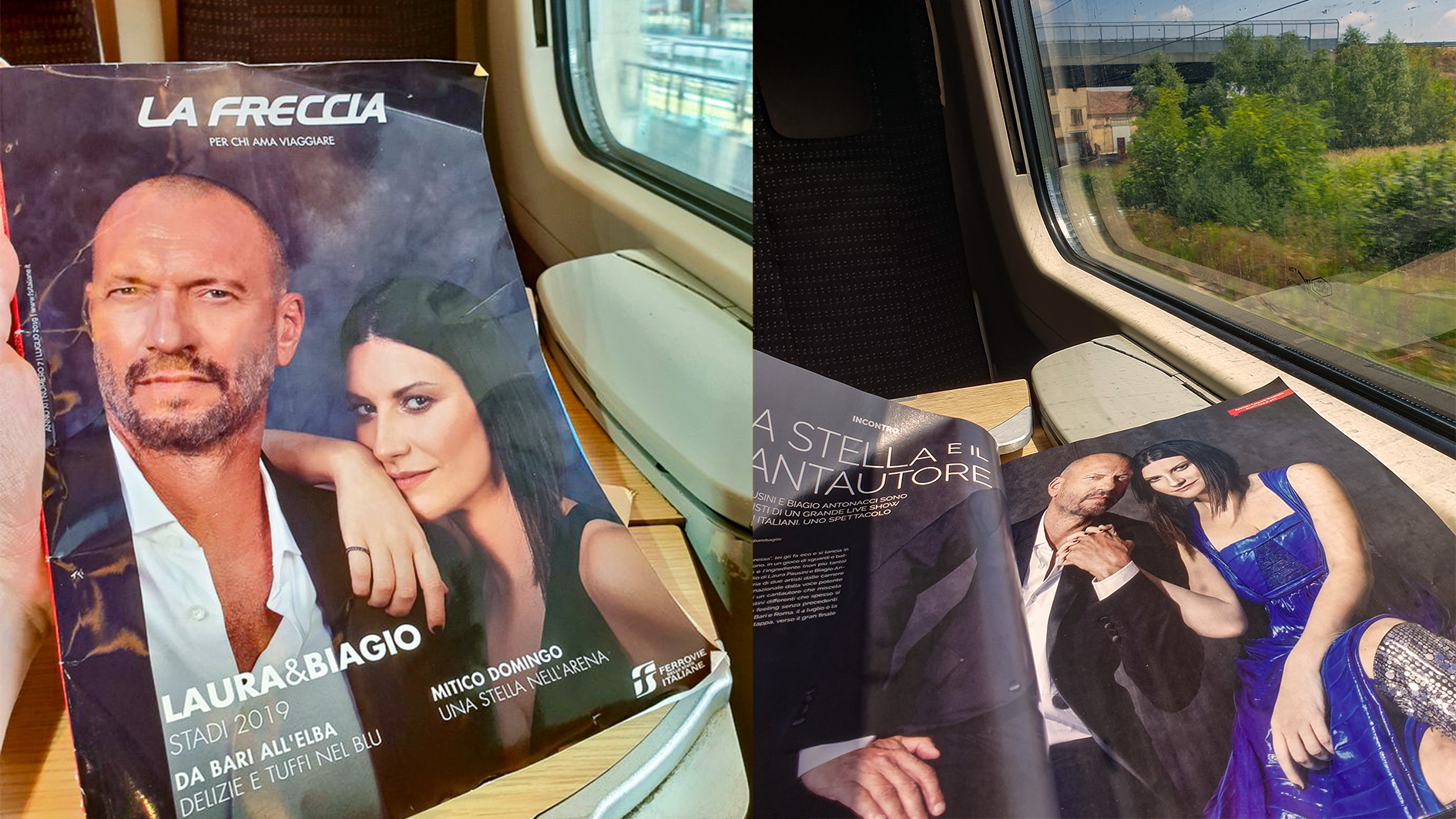
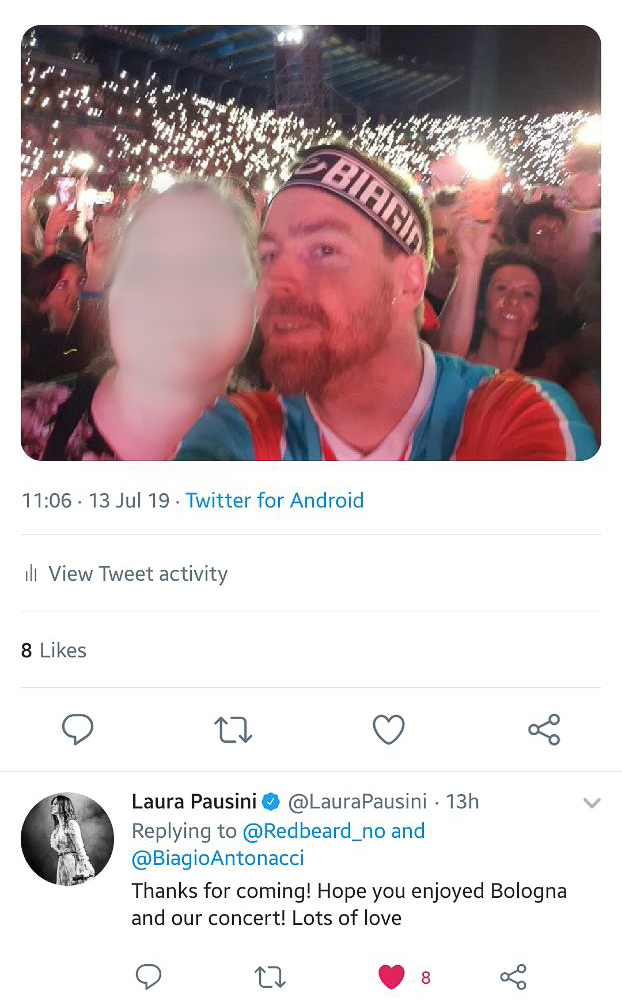
Laura replied.
«Thanks for coming! Hope you enjoyed Bologna and our concert! Lots of love»
I had written to her before. I had tried using Italian in comments on her posts and had received a few likes in return. She had seen my name before.
But now she had seen me in Bologna too.
For me, the circle was complete. «You know some Italian, right?» at the soundcheck. «Thanks for coming» on Twitter the following day.
She knew who Bjarte on Twitter was.
The Norwegian from the soundcheck.
For me, that was the confirmation.
«Laura Pausini!», I thought once again.
At that point, to be honest, I no longer felt quite such an urgent need to see Venice.
Laura Pausini had spoken to me the day before.
And now Laura Pausini had written to me too.
I needed a nice, peaceful lunch.
And a decidedly oversized beer.
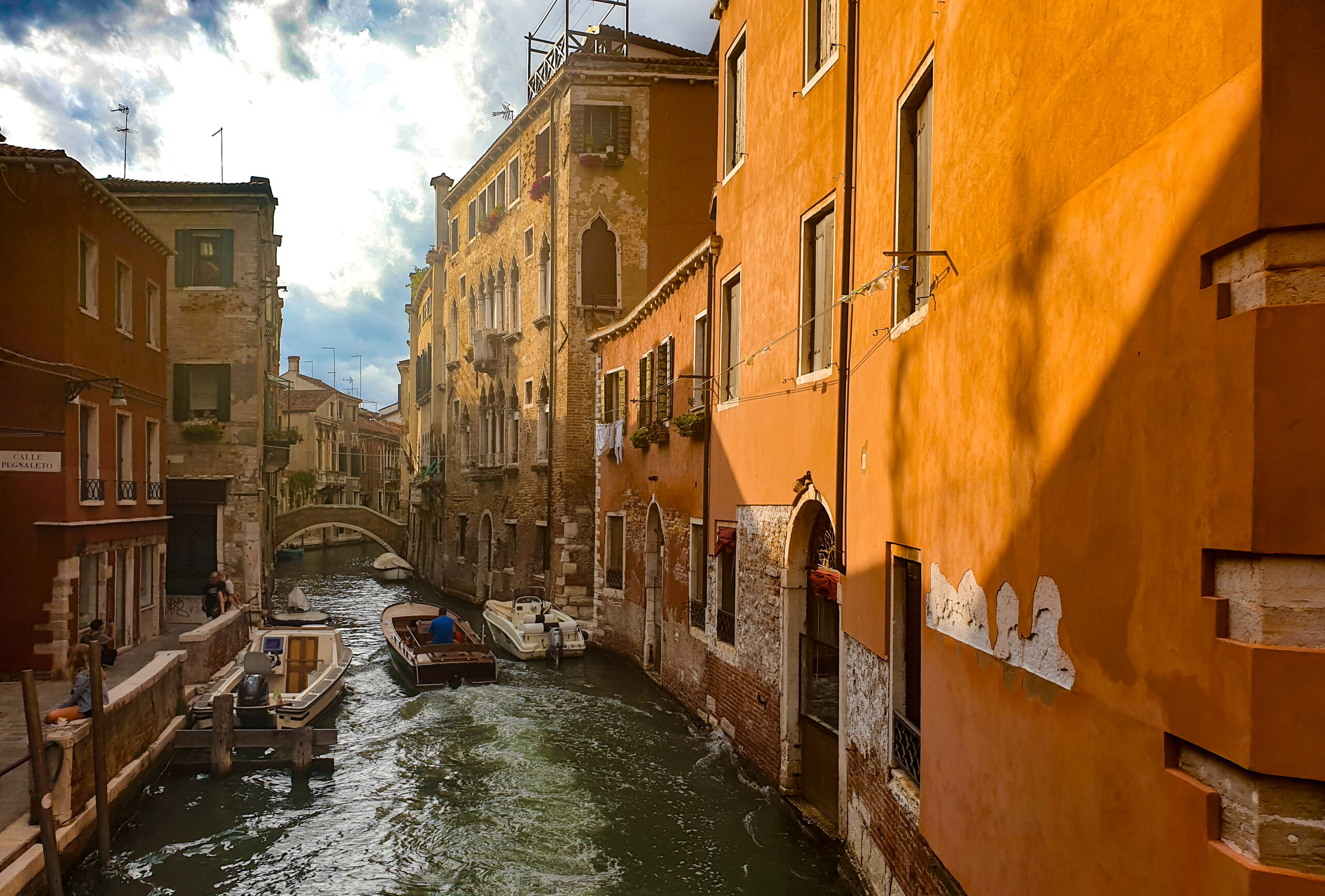
Laura, alone, beneath a great arch.Just Laura.
It would be five years before I saw Laura on a stage again.
That hadn't been the plan.
The world stopped. Travel and concerts disappeared. But Laura didn't.
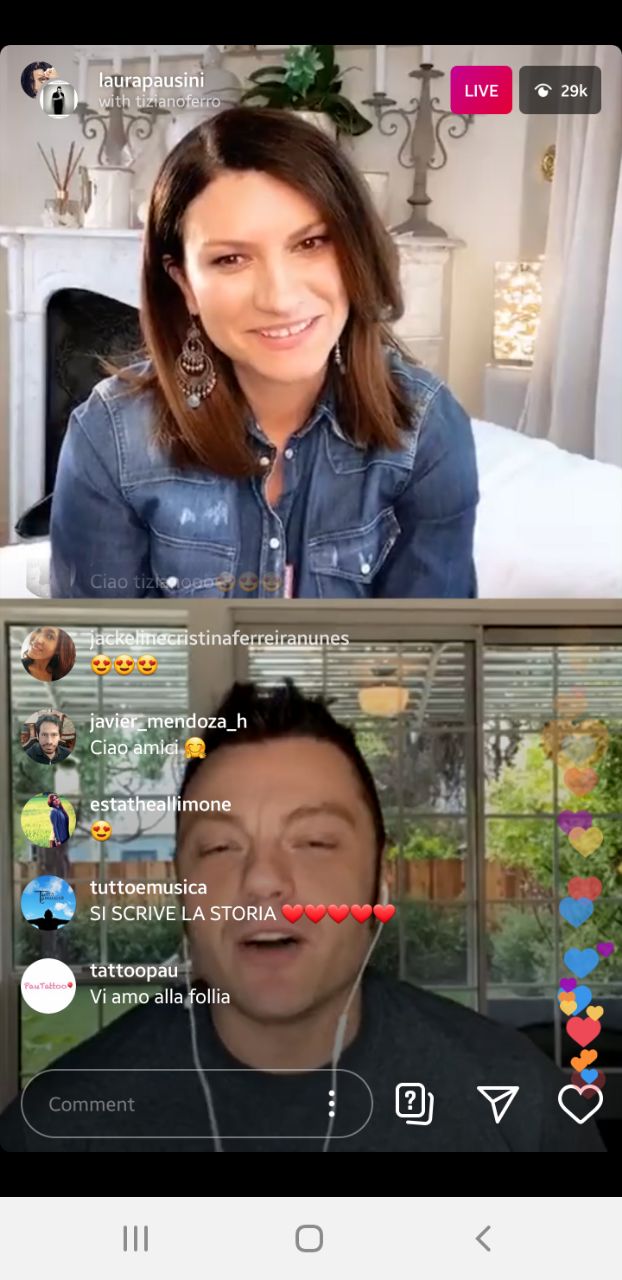
In March 2020, among other things, she began doing Instagram livestreams. I watched the entire one with Tiziano Ferro, from beginning to end.
The following week, I was there again.
This time in the company of Laura Pausini and Kaká.
Kaká had been one of my favourite footballers when he played for Milan and Brazil. One of the great players I had admired.
And now, there he was, chatting to Laura.
I remember feeling a little emotional.
Wow. That's Kaká.
And that's Laura, the best in the world.
There they were, talking together live, right in my ears, while I lay in bed in Norway, desperately missing everything to do with Laura and Italy.
The world had become very small.
But just then, Italy felt a little closer.
Laura simply hadn't understood that I had understood.
Once, Laura posted an old photograph from when she was pregnant with Paola.
I had actually understood perfectly well that it was an old photograph. Seven years had passed, and I thought I would congratulate her on the anniversary, in a rather Norwegian way.
The problem was that I wanted to do it in Italian.
I went to Google Translate.
«Tanti auguri.»
It seemed right.
Copy. Paste. Send.
A little later:
Ping.
Laura Pausini had replied.

«Non sono incinta!!!! È un ricordo di 7 anni fa.»
So I had understood her post correctly.
Laura simply hadn't understood that I had understood.
Somehow, Google Translate had managed to make me congratulate Laura Pausini on a pregnancy that didn't exist.
Laura Pausini had spoken to me. Laura Pausini had written to me.
And now Laura Pausini had personally had to explain to me that she wasn't pregnant.
It has become one of my favourite Laura stories to tell.
«Una volta Laura mi ha detto che non era incinta.»
It almost sounds made up.
But then again, we're talking about Laura.
And after all that, there would still be more Laura.
«Io sì», from «La vita davanti a sé» with Sophia Loren, had been written by American songwriter Diane Warren, with Italian lyrics by Laura and Niccolò Agliardi.
The film was directed by Edoardo Ponti, Sophia Loren's son. And it had been filmed in Bari, a city I would visit myself a few years later, precisely because of Laura.
Then came «Scatola», a new Laura song that got straight into my head. The single was promoted in Times Square with a billboard that made it look as though Laura was stepping out of a box. «Scatola» was advertised in the same way elsewhere around the world too: in Milan, Paris, Brazil and other places.
Then came «Piacere di conoscerti», directed by Ivan Cotroneo. A film in which Laura Pausini imagines what her life would have been like if she hadn't won Sanremo, while looking back on the life she had lived as an artist up to that point.
A film that now makes me cry in several scenes, every time I watch it.
Beautiful and important at the same time.
Later, in 2022, Laura hosted the Eurovision Song Contest in Turin alongside Mika and Alessandro Cattelan.
I was ready in front of the television for both semi-finals and the final, with balloons, a Laura Pausini T-shirt and excessive quantities of snacks. Although I usually follow Eurovision, this edition was truly special.
«Er det hun der Plusini, Bjarte?»
In other words: «Ma è quella la Plusini, Bjarte?» – “Is that that Plusini woman, Bjarte?”
Those were the kinds of comments I was getting on Snapchat and Facebook when the final began. Laura opened the show with not just one song, but a medley of five.
Laura certainly hadn't disappeared.
She was «Grande Laura», just as she had always been.
When Laura announced new concerts in Italy, the choice was between Eboli, in Campania, and Bari.
Both were in southern Italy, and both were new places for me to discover. I also wanted to fit in a little holiday somewhere warm, while Norway was well into late autumn or winter.
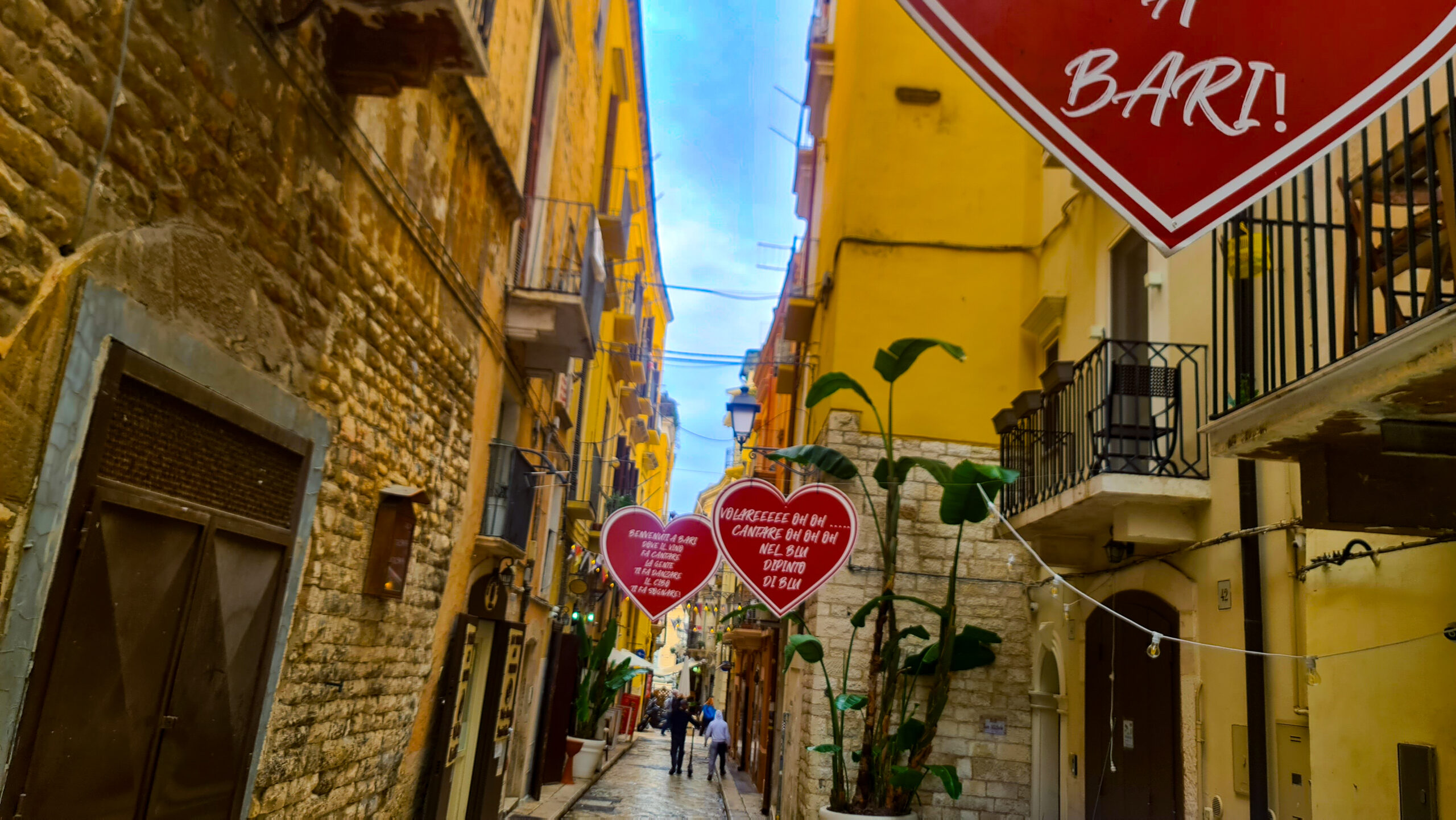
Bari was further south, and it was also the most practical option.
So Bari it was.
Five years had passed since Bologna, and a lot had happened in the meantime.
I had started cooking Italian dishes that friends and family described as better than restaurant food. I could sing «Simili» without any music. And the karaoke host at Fotballpuben in Bergen now knew which song to find for me:
«Tra te e il mare».
And the people around me had long since learned that certain words needed to be used with caution.
Italy. Pasta. Bacon. Pizza.
Mention just one of them, and you risked finding yourself listening to a lecture on why guanciale is sacred and cannot be replaced with cheap bacon. Or on the difference between rigatoni and mezzi rigatoni.
Italy occupied considerably more space in my life than it had on that first trip to Rome.
And so did Laura.
In the meantime, there were new favourite Laura songs too. «Scatola» had stuck in my head, and «Io sì» had become one of the songs I really couldn't wait to hear live.
Even so, before the PalaFlorio, I was trying to keep my expectations somewhat under control.
The latest album was more modern and pop-oriented than much of the Laura music I had first fallen in love with. I imagined there would be moments when both I and perhaps some of the audience would feel a little less involved.
This time, we would also be further from the stage than we had been in Bologna.
But there was something new too.
This time, Laura would be singing indoors.
A smaller arena. Not an intimate concert, but a more intimate concert.
Five years after Bologna, I was finally going to see Laura Pausini again.
I almost couldn't believe it.
And perhaps the joy was just as great as it had been in Rome, when I saw her for the first time.
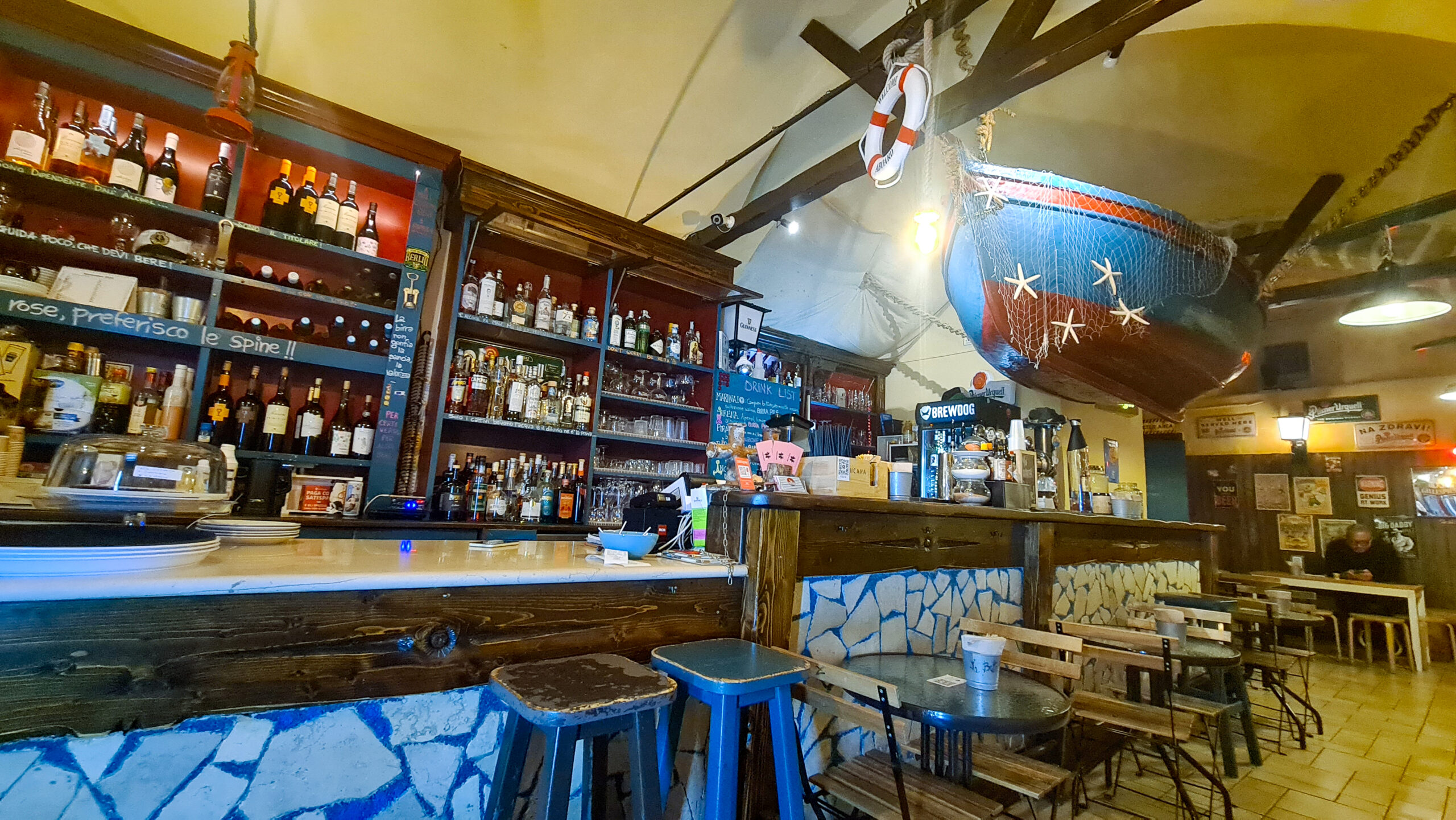
Before entering the PalaFlorio, we had to walk past the stalls outside to find our entrance.
Naturally, Laura's music was playing from the stalls.
I began humming along.
Then I started singing.
Quite loudly.
I noticed some of the people working at the stalls openly smiling as I passed. Perhaps it wasn't quite what they expected from a decidedly Nordic-looking bloke on his way to the PalaFlorio.
But I had waited five years.
I was about to see Laura again.
I could let myself go a little.
Inside the PalaFlorio, we were further from the stage than in Bologna, but we had a good view of the whole scene.
There was already stage smoke in the arena before the concert began. Apparently, that's perfectly normal. Perhaps I should have known, but my concert CV consists mainly of Laura Pausini, Karin Park and the odd Bergenfest or other random festival.
Then «Il primo passo sulla luna» began.
At first, without Laura.
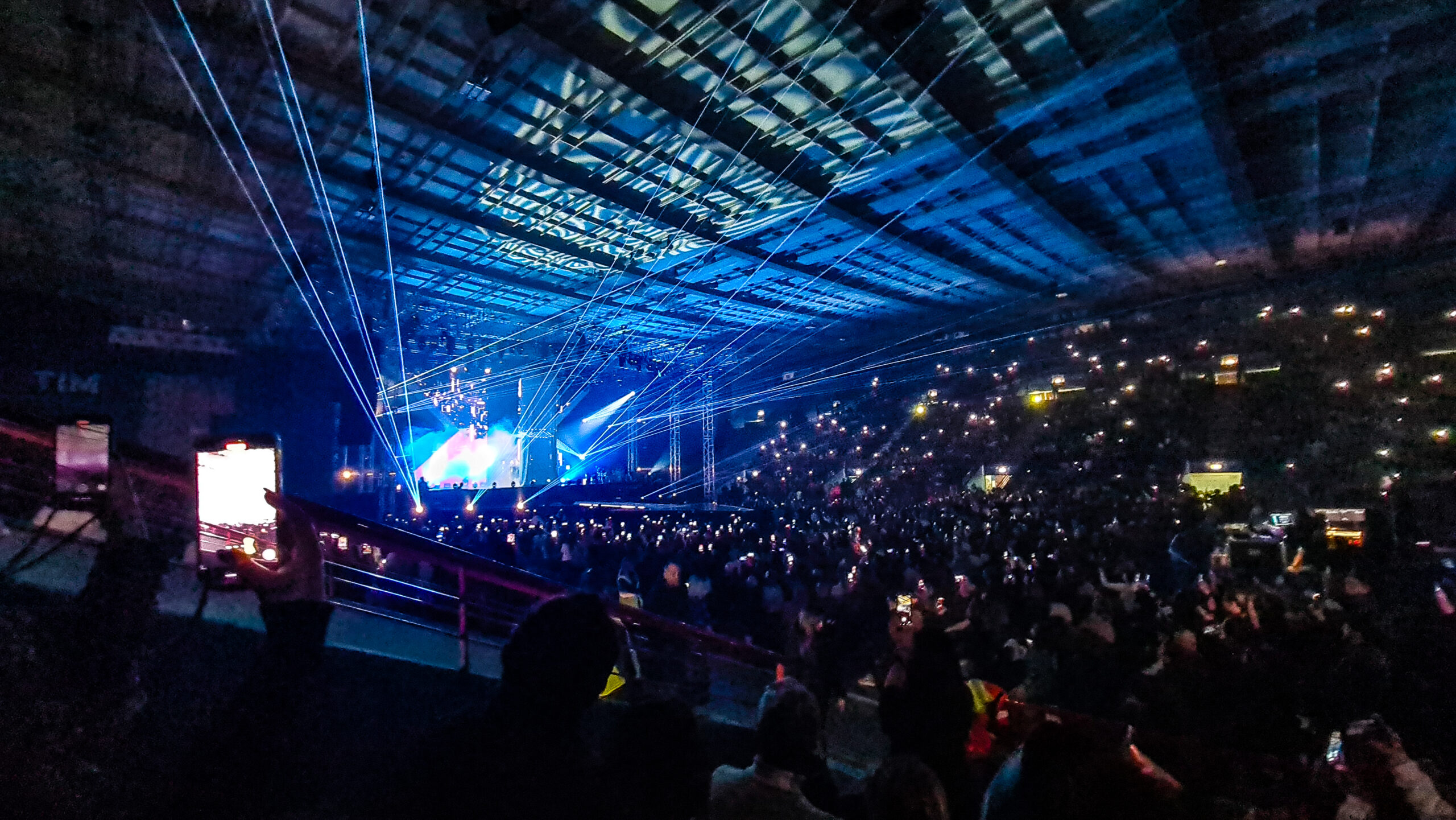
There were screams in the arena as the show began, but also a sense of anticipation as the song got underway.
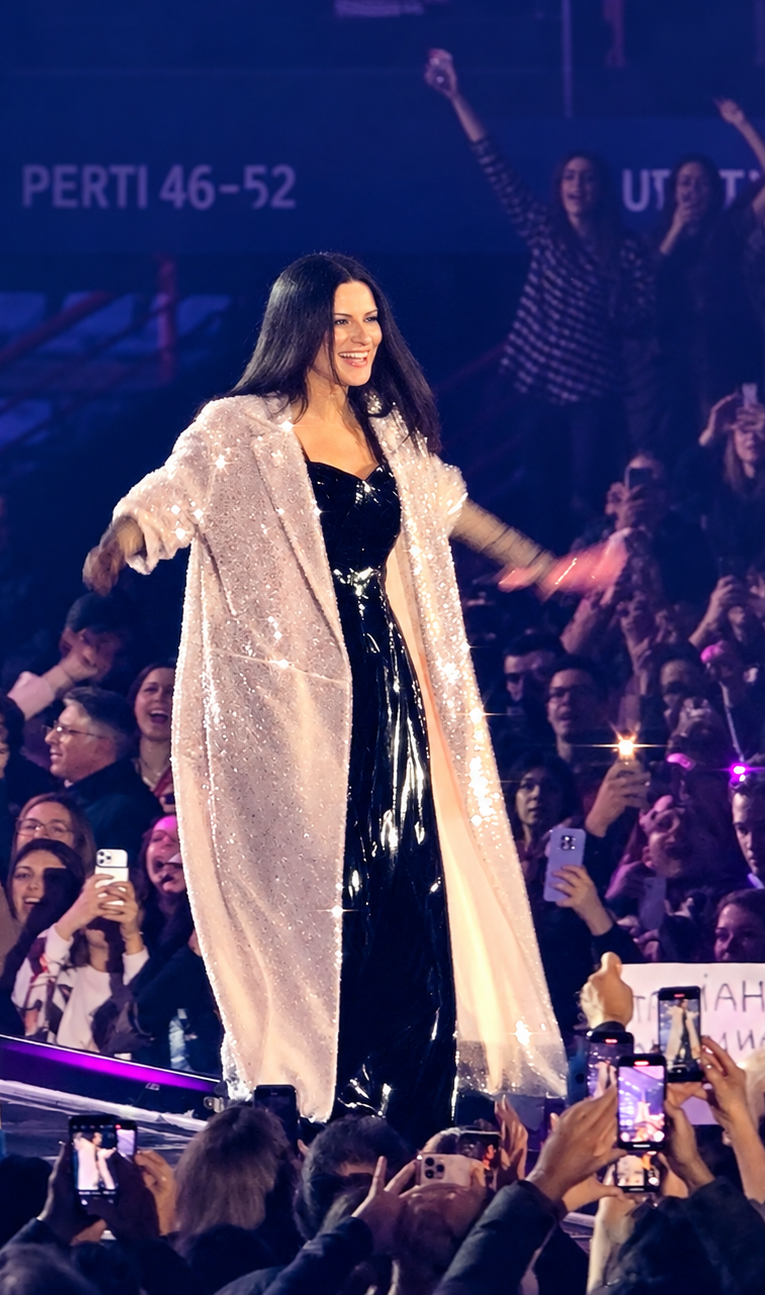
Then Laura appeared.
And the PalaFlorio exploded.
«LAURA PAUSINI!», I shouted.
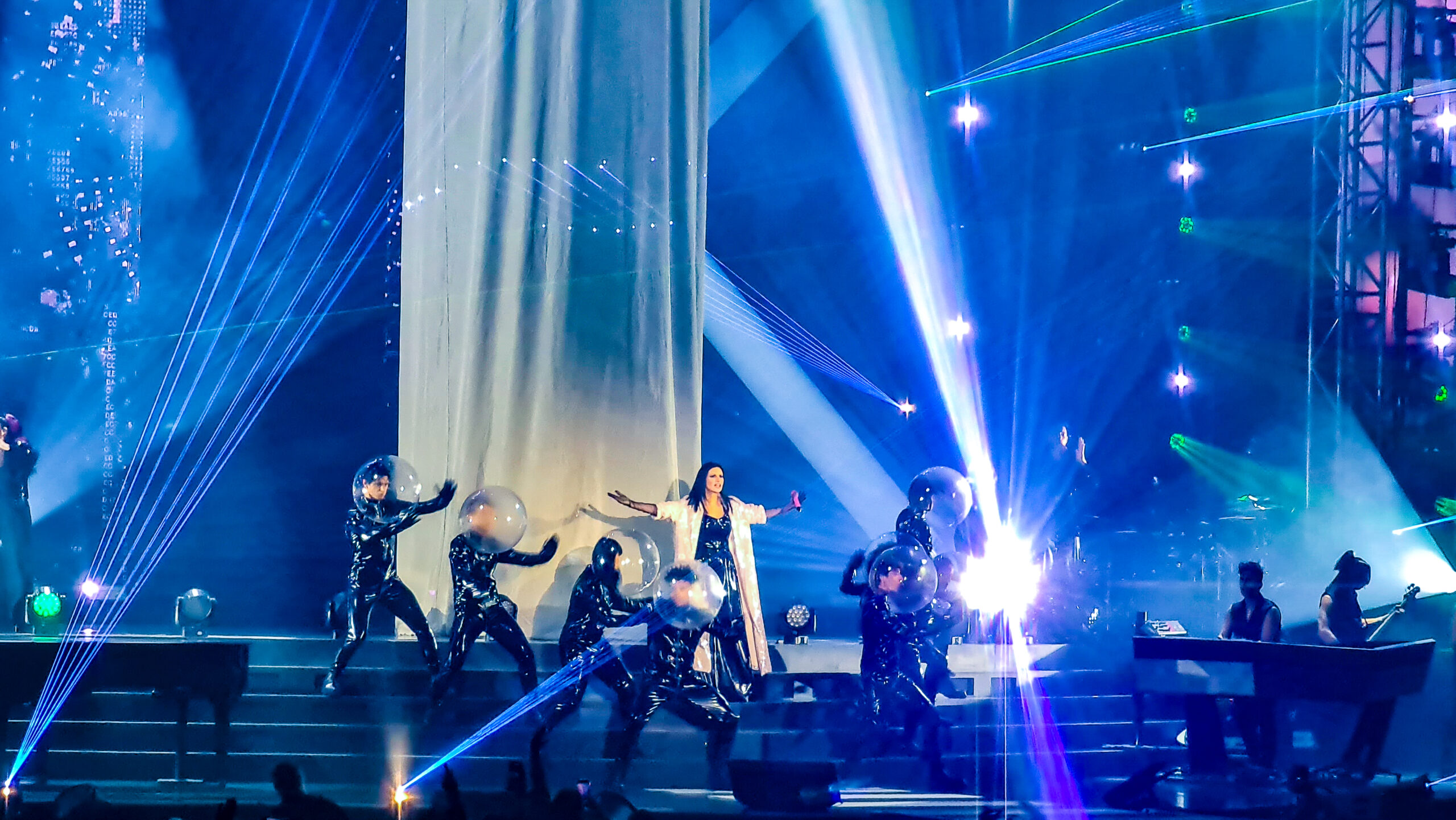
It had been five years since I had last seen her on a stage. I almost felt as though my whole body wanted to cry.
But other parts of my body were busy with quite different things.
Joy. Excitement. Respect for Laura.
I wanted to sing with her. I wanted to stand up. I wanted to follow everything. I didn't want to miss a thing.
The tears could wait.
«CIAO BARI!»
There she was.
The greatest Laura in the world.
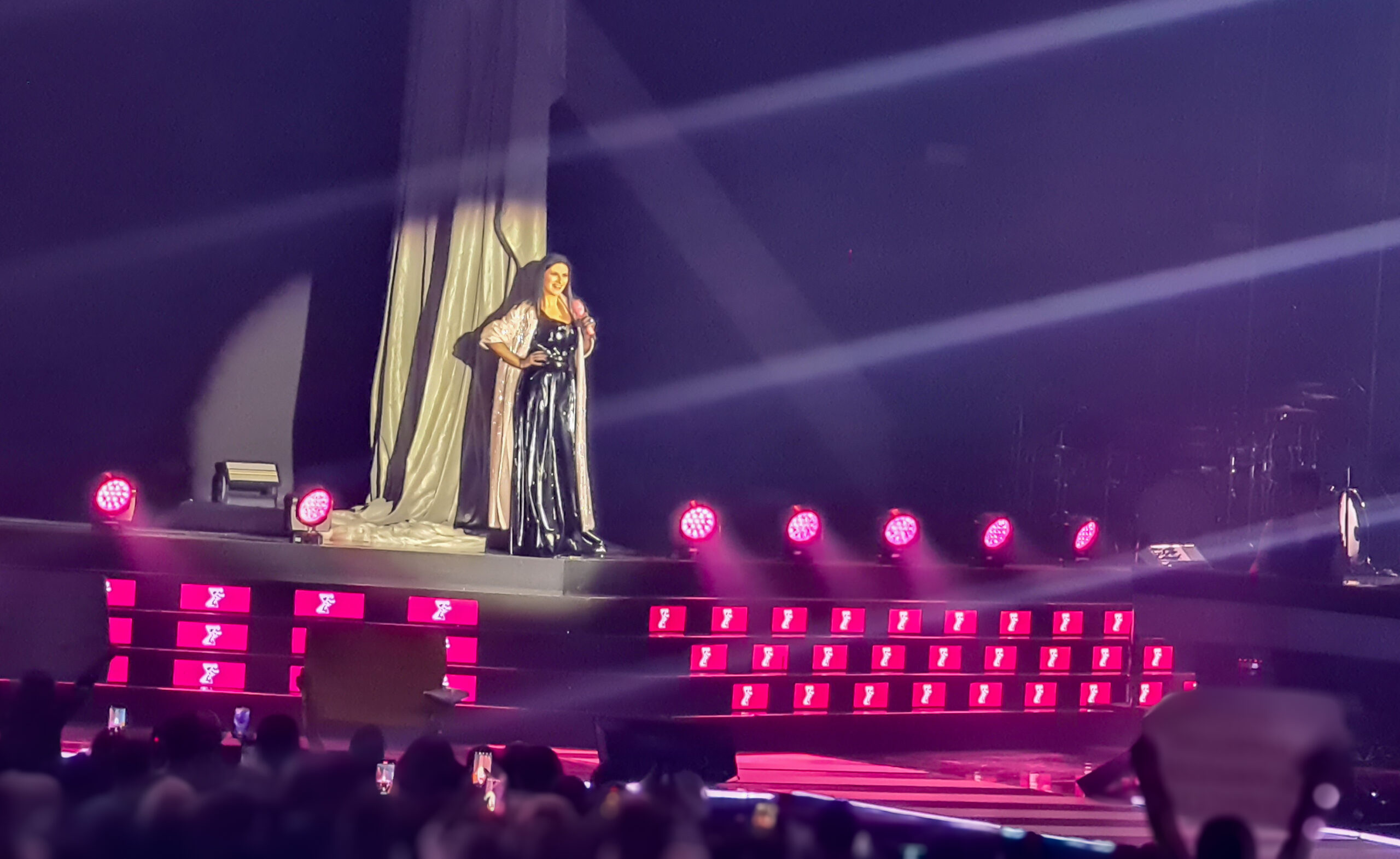
Honestly, I could have gone home already.
I was already happy.
But just as in Rome, the tears arrived a little later.
Now I was in Bari, looking at that same smile.
The PalaFlorio was smaller than Rome and Bologna, but the concert felt no less carefully put together.
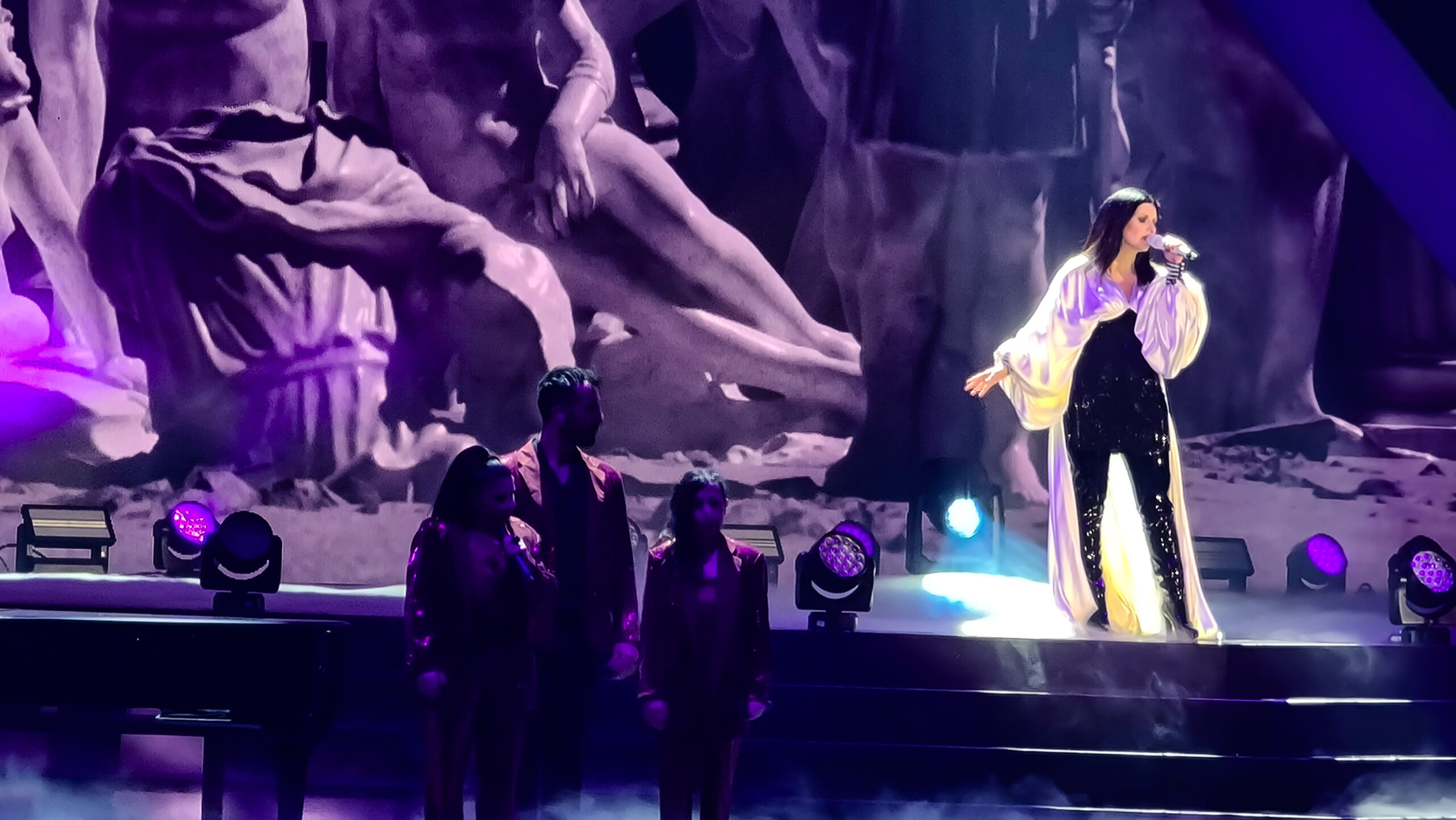
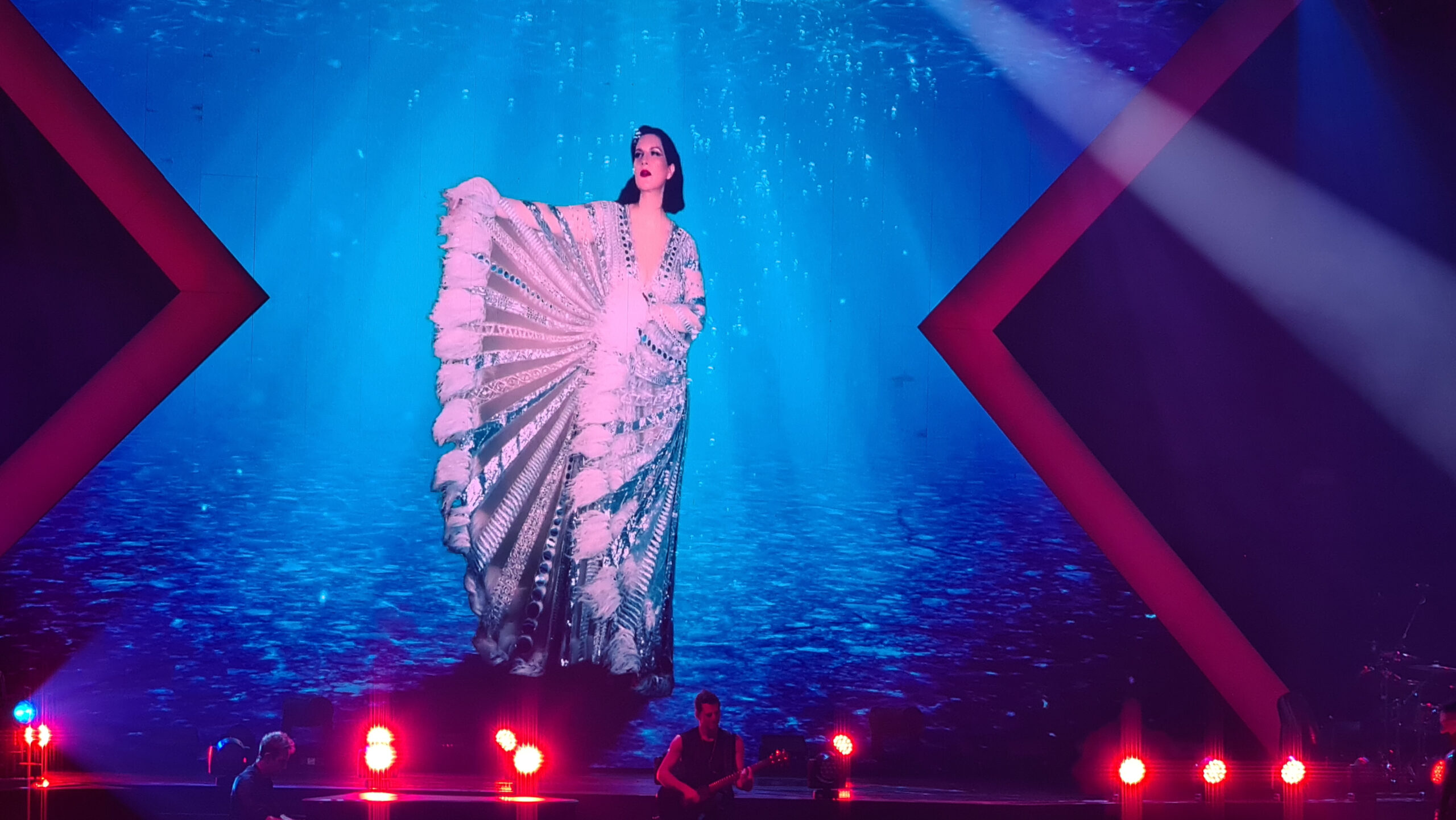
Almost every song had its own identity. New costumes, new lights and new staging. Even songs I had already seen Laura perform had received new arrangements and new stage interpretations.
I had heard «Frasi a metà» in Rome.
Now it was presented so differently that for a moment I thought it was «Resta in ascolto».
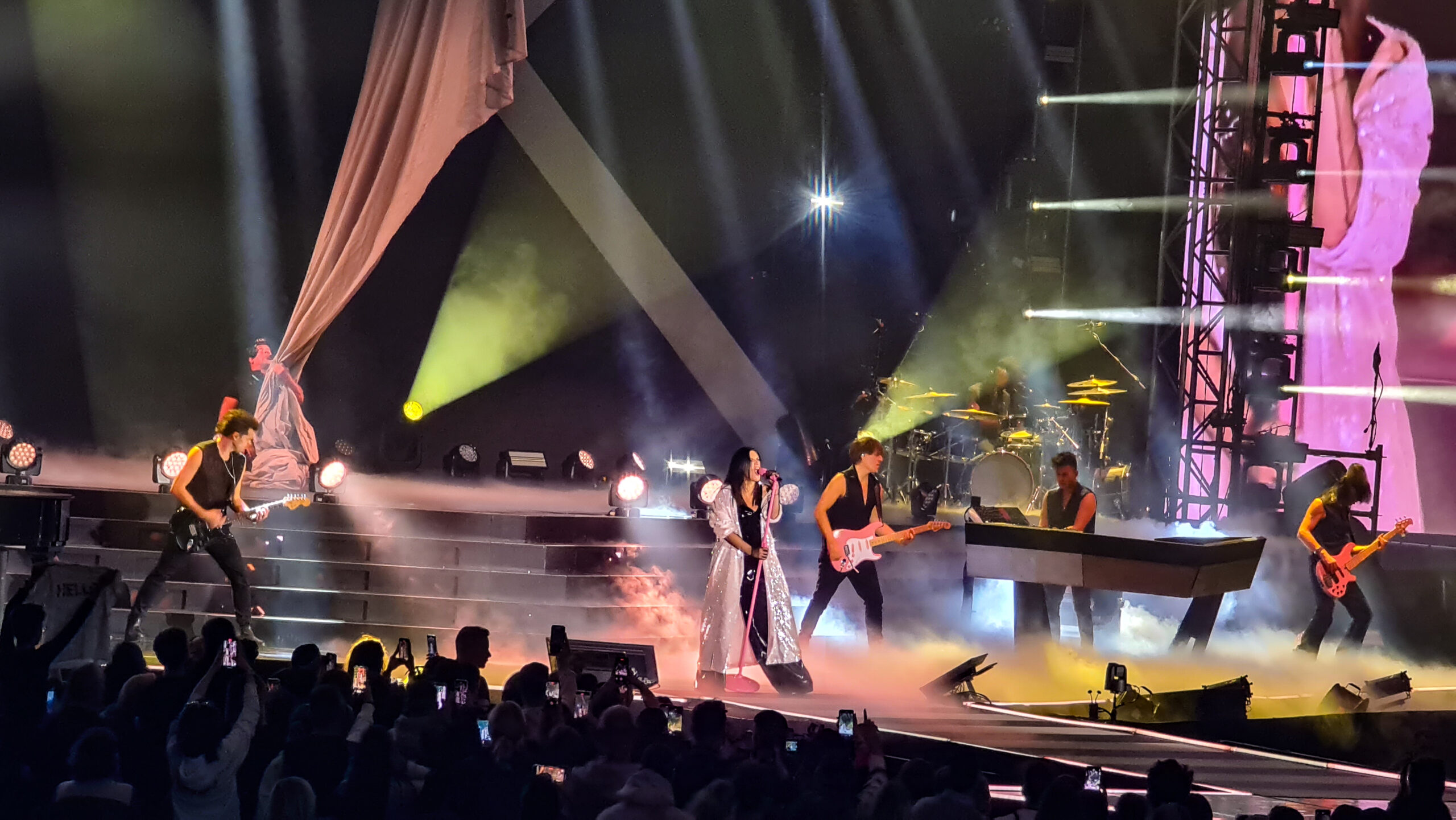
We were further back this time, but eventually it almost turned out to be an advantage. We could see the entire show and, all things considered, we had more than a decent view. Although I would probably still have preferred to be down there in the inner circle, shouting «LAURA!!» every other song.
And then there were the screens.
They seemed enormous.
On them, Laura almost seemed to be standing right beside me.
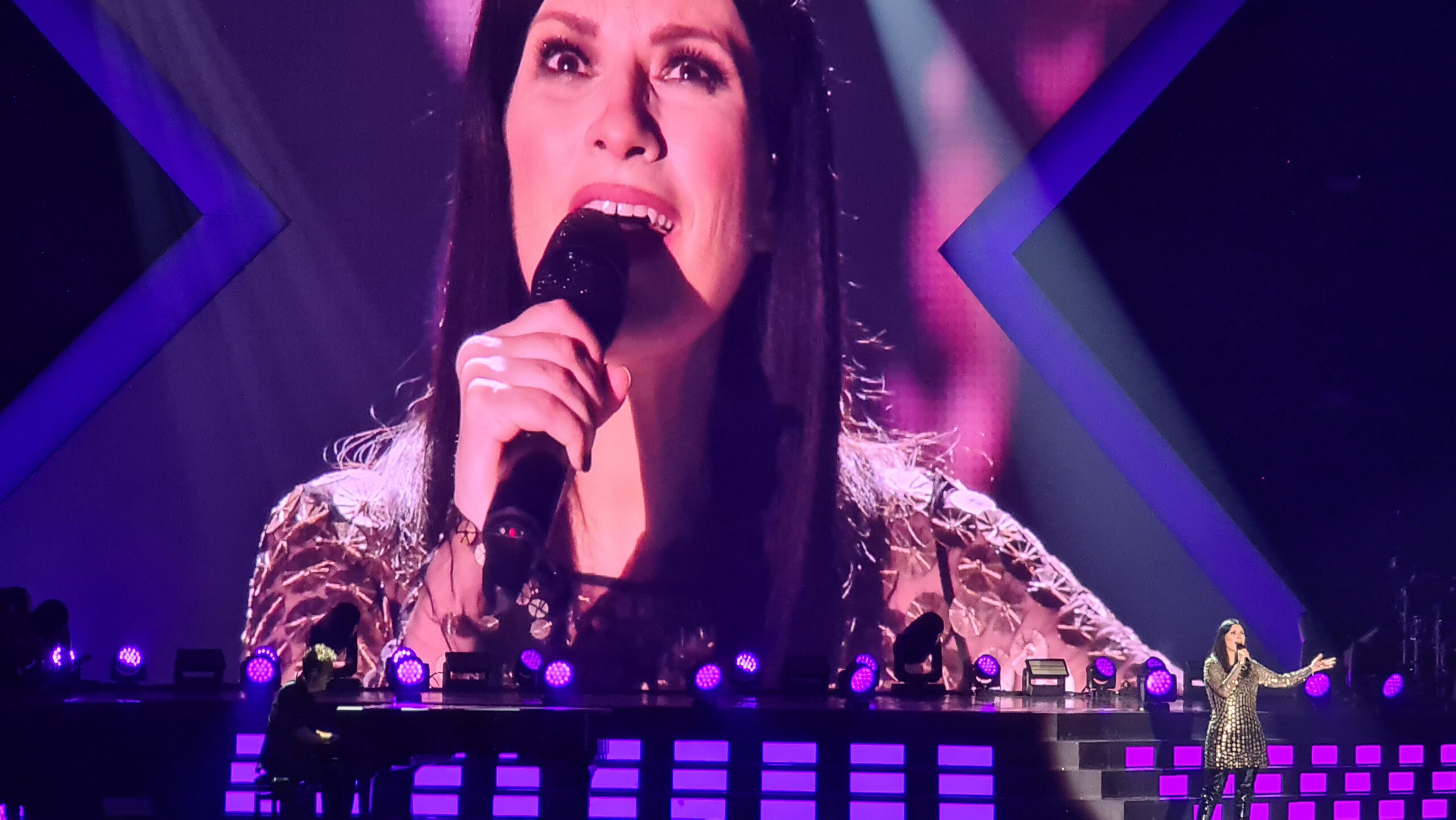
And on those screens, I could see some of the things I love most about Laura, apart from the music.
Her charm. The smile. Her eyes when she becomes sad or emotional. Her expression when something fires her up. The joy when she is truly enjoying herself on stage.
All of Laura.
It almost took me back to before Rome. To a YouTube video of the San Siro concert in 2016, where Laura walks on stage smiling to «Simili».
That Laura I had watched on a screen at home in Norway, and fallen for.
Now I was in Bari, looking at that same smile.
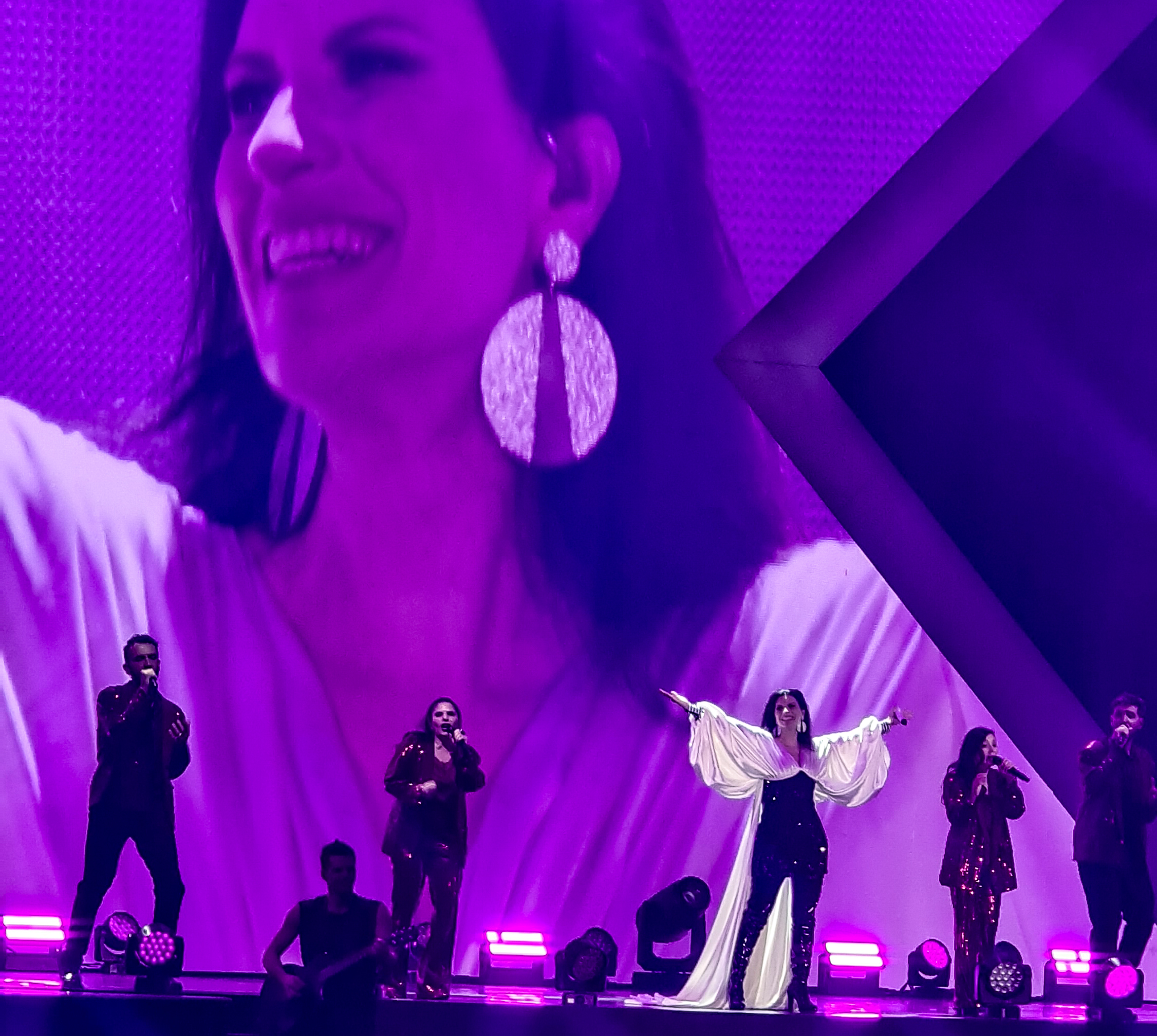
A lot had changed in five years. The show had changed. The songs had taken on new forms. The costumes were new. I had changed too.
But Laura was still Laura.
Just as enthusiastic. Just as full of smiles. And seemingly just as bloody delighted to be there as the audience.
Perhaps that mattered more than everything else.
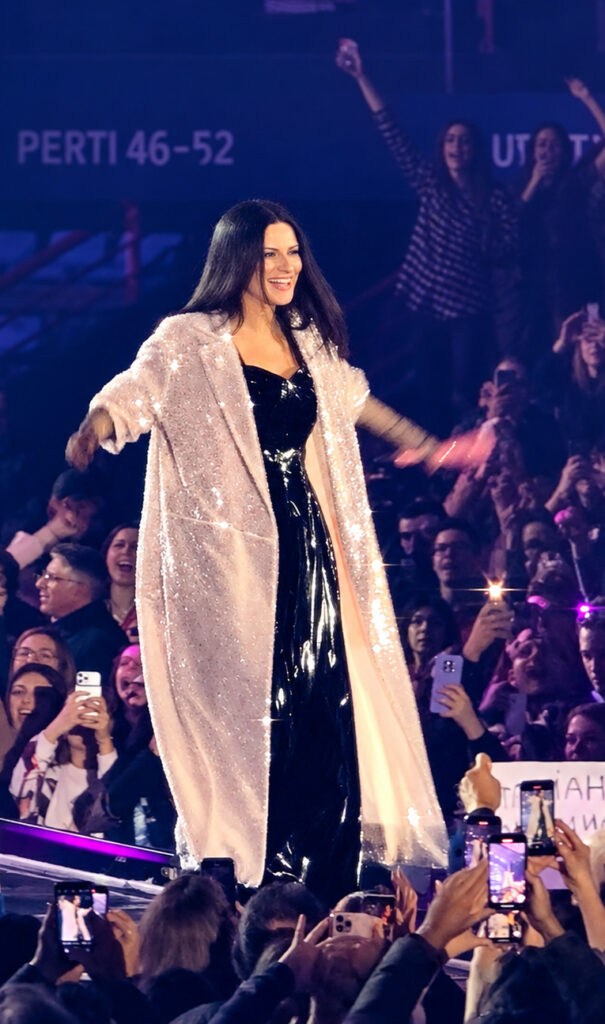
Beside us was an Italian couple.
During a break, I tried asking where they were from, using a mixture of Italian and English.
«Foggia.»
Then he added in English:
«Yeah, it's foggy there. It's Foggia.»
I'm not sure how meteorologically accurate that explanation was.
But I have never forgotten where they came from.
Then «Strani amori» began.
And there we were, back at the beginning of this story.
When «Strani amori» started, it was obvious to me. And perhaps to many others in the arena too.
This was a song to stand up for and sing along with Laura.
I stood up, looked over at the couple and tried to make it fairly clear that it was their turn now too.
They smiled.
Then they stood up.
The concert continued, and so did the encounter with the couple from Foggia.
And then there was «Tra te e il mare» too.
Immediately after the song, Laura picked it up once more with us. We jumped and sang.
At home in Bergen, this was the song the karaoke host at Fotballpuben knew I would sing.
Now I was in Bari, singing it with two Italians I hadn't even known when the concert began.
I had my arms around them as we sang.
In the video of the concert, I can hear my own voice loud and clear. I knew the song.
The man from Foggia had noticed too. He told me he was impressed by how well I knew Laura's songs.
Especially this one.
«Tra te e il mare».
Perhaps it was that same feeling of family I had discovered back in Rome.
You didn't need to know each other.
You only needed to know Laura.
Laura brought us together. Norwegians and Italians in Bari. A Swiss woman in Bologna. People who didn't know each other, but could sing the same songs.
You only needed to know Laura.
At some point, I began to feel that the concert was approaching its end.
Many of the old songs had already been sung. It had been a long evening with Laura.
Then came the children.
One by one, they came up on stage and sat in a circle around Laura.
In the middle of all that production, the lights, the screens and the thousands of people, there was suddenly Laura Pausini sitting on stage, surrounded by children.
It was absurdly magical.
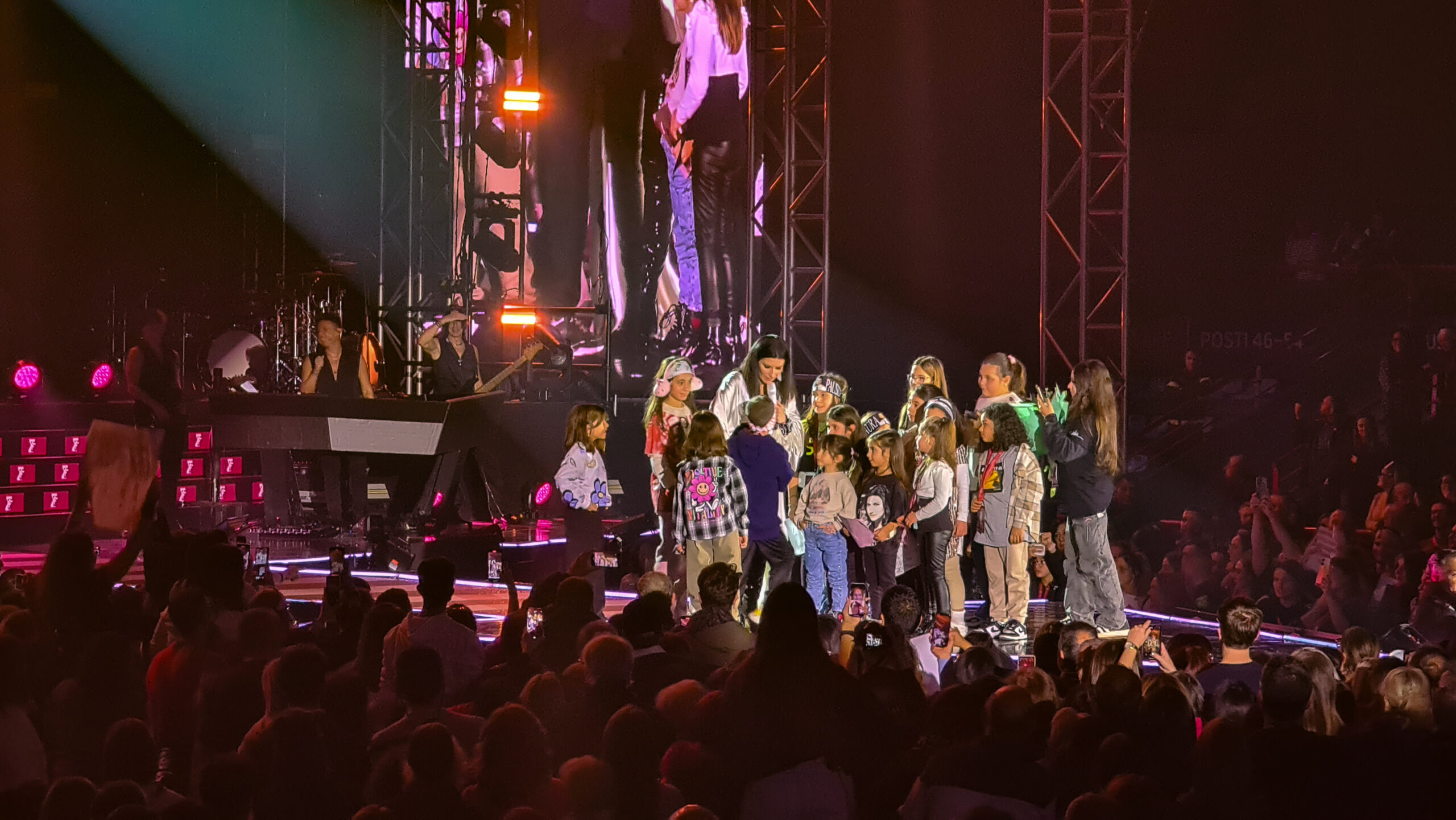
Laura talked to them and tried to involve as many as possible. I still didn't understand everything being said, but one of the children explained, among other things, that in their family it was Dad, not Mum, who loved Laura the most.
And that he was absolutely crazy about you, Laura.
The audience burst out laughing.
Near us, a little girl was crying. She wanted to go up to Laura too, but we were perhaps thirty or forty places away.
I thought I could easily pick her up and carry her all the way to the stage.
But she wasn't my child, after all.
So I stayed where I was.
A little disgruntled that I wasn't a child myself any more.
But there was something deeply Laura about the whole scene.
Family has always mattered to her. That evening, the next generation had found a place at the centre of the stage too.
When almost all the children in the arena, with a few small exceptions, had gathered on stage, Laura brought the whole gang, and the rest of the audience, into «La solitudine».
At that point, it was almost too much for me.
And as the children sat in their circle around Laura, I thought once again that the concert must surely be almost over.
Of course it wasn't.
There was more Laura.
And perhaps, really, that was exactly as it should be.
Because even after the concerts, Laura never truly disappeared from my life.